Hanoi in January: What to Expect
What is Hanoi like in January?
January sits deep in the cool, grey northern winter: overcast skies, a fine persistent drizzle, and cool air rather than real cold. Some years the Tet holiday falls in January, which closes shops and clogs transport for several days, so check the dedicated Tet page before you book rather than assuming a date.
I landed in Hanoi one January expecting a mild, forgiving version of winter, the kind you get in the tropics further south. What I got instead was a low grey ceiling that sat over the Old Quarter for most of the week, a fine mist that never quite became rain but never quite stopped either, and a chill that got into my hands every time I stepped off a motorbike. Nobody had warned me that northern Vietnam has real seasons. I want to save you that surprise.
A Northern Winter, Not a Tropical One
This is the part people get wrong before they arrive. Hanoi sits far enough north that it runs on a proper four-season climate, and January is deep in the cool, grey stretch of it. There is no reliable sun, no blue-sky postcard light, and no reason to pack for a beach. What you get instead is low cloud, a damp chill that clings more than it bites, and short days that make the city feel like it never fully wakes up. I found myself layering up every morning and shedding almost nothing by afternoon, which is unusual for Vietnam and caught nearly everyone in my hotel off guard.
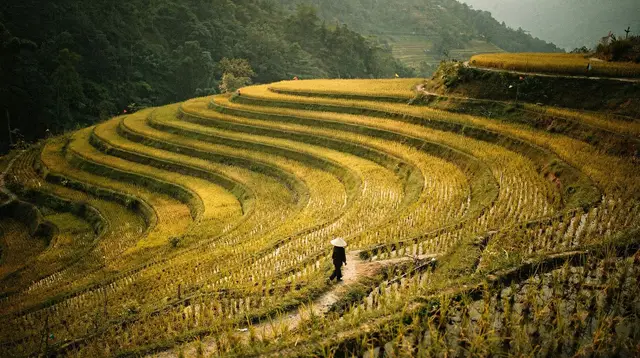
Head north-west to Sapa or up towards Ha Giang and the same weather turns markedly colder and mistier. Cloud sits in the valleys for days at a time, visibility on the passes can drop to almost nothing, and the terraced hillsides lose all their green-season drama, since the rice terraces are bare and waiting for spring planting this time of year. I would not build a first trip to the north around January mountain scenery. It is honest, moody, atmospheric even, but it is not the postcard version, and I’d rather tell you that upfront than let you find out on a fogged-in viewpoint.
Where January Sits in the Seasonal Calendar
I think of January less as its own thing and more as the middle of a longer cool, grey stretch that runs through the winter months. If you want the full picture of how the seasons unfold across the year, including when the terraces turn gold and when the bays are calmest, the best time to visit Hanoi guide is the page I’d point you to first; this one is really a close-up on a single, unglamorous month within it.
Here’s roughly how I’d describe conditions region by region, based on what I saw and what locals told me, without pretending to give you numbers I can’t verify for your exact dates:
| Region | What January feels like | My honest take |
|---|---|---|
| Hanoi city | Grey, damp, a fine drizzle (mua phun), cool rather than cold | Fine for museums, food, indoor sights; skip rooftop plans |
| Ninh Binh karst | Misty, atmospheric, occasionally moody boat rides | Beautiful in its own quiet way, just not sunny |
| Ha Long / Lan Ha Bay | Overcast, cooler sea air, calm water most days | Cruises still run; pack a warm layer for the deck |
| Sapa / Ha Giang | Colder, foggy, sometimes near-freezing at altitude | Bring real layers; visibility on passes can be poor |
The Wild Card: Tet
The one thing that can completely reshape a January trip is Tet, the lunar new year. It doesn’t fall on a fixed date and it doesn’t always land in January at all; some years it slips into February. What matters is that when it does happen, it isn’t a minor local holiday: family-run restaurants shutter for days, craft villages like Bat Trang go quiet, and every bus, train and flight in the country books up while prices climb.
I’d never plan around a specific date I’d guessed at, and I’d strongly suggest you don’t either. Instead, check the dedicated Tet lunar new year in Hanoi page before you lock in flights, because it explains how to check the actual date for your travel year and what to expect if your trip overlaps with it.
What I’d Actually Do With a January Week
Given the flat light and the drizzle, I leaned into things that don’t depend on a view. The Temple of Literature and the museums around Ba Dinh district were genuinely better experiences in January than they would have been under a blazing summer sun, since the courtyards were empty and the cool air made walking pleasant rather than exhausting. I spent a long, unhurried afternoon working through bowls of pho and bun cha in the Old Quarter, which felt exactly right on a grey day, and an evening at the water puppet theatre that didn’t care one bit about the weather outside.
For day trips, I still went out to Ninh Binh and rowed through Tam Coc; the mist actually suited the limestone scenery, turning it moody rather than disappointing. I was more cautious about the far north. A Sapa trekking trip in January means real cold at altitude and a real chance of fog closing in, so I’d only recommend it if you’re prepared for that and not chasing golden-terrace photos, which belong to a different season entirely. If you’re weighing the north’s two big driving routes for a later trip, the Sapa versus Ha Giang comparison lays out the trade-offs better than I can in a paragraph.
For the bay, I still went out on a cruise, just with a warmer jacket than I’d packed for anywhere else in Vietnam. Cabins are heated and the boats keep running through winter; the main change is that the light is flatter and the deck is colder, not that the experience is diminished. I booked a two-day Ha Long Bay cruise from Hanoi and was glad to have the extra night aboard rather than rushing it as a day trip, though a full-day Ha Long Bay trip from Hanoi is the sensible choice if your schedule is tight.
One thing I’d genuinely recommend for a grey week: lean into indoor, cultural half-days rather than fighting the weather. I joined a three-day Thai Nguyen tea culture tour from Hanoi that turned out to be one of the highlights of the whole trip, warm tea houses and hillside plantations doing exactly what a damp January afternoon needed. Closer to the city, a half-day out to see the Dinh Bang communal house filled a slow morning nicely when I didn’t feel like fighting traffic for a full day trip.
Packing and Practicalities
I underpacked for this month the first time and regretted it. Layers matter more than any single heavy coat: a base layer, a warm mid-layer, and something wind- and water-resistant on top covers Hanoi’s damp chill and copes with the sharper cold if you head up to Sapa or Cao Bang. A light scarf and decent shoes with grip helped more than I expected, since wet stone steps around temples and boat landings get slippery. If you’re planning transport or booking logistics around a possible Tet clash, it’s worth reading how many days in northern Vietnam alongside your dates, since a holiday closure can quietly eat two or three days of a short itinerary.
None of this makes January a bad month, exactly. It’s a quiet, unglamorous one, better for food, culture and slow city days than for dramatic landscapes, and worth knowing about honestly before you build a trip around it.
Hanoi in January: Common Questions
Is January a good time to visit Hanoi?
It’s a workable time, not a spectacular one. Expect grey skies, a fine persistent drizzle, and cool damp air rather than sunshine, which suits museums, food and city sightseeing better than mountain views or beach days.
Does it snow in Hanoi in January?
No, Hanoi itself doesn’t see snow; the city stays cool and damp rather than freezing. Higher areas like Sapa, Ha Giang and Cao Bang get noticeably colder and can occasionally see frost or a rare snowfall at altitude, particularly around Fansipan.
Will my trip clash with Tet in January?
It might. Tet follows the lunar calendar and its date shifts every year, sometimes landing in January and sometimes in February, so check the current year’s date on the Tet lunar new year in Hanoi page before booking rather than assuming.
Are the Sapa or Mu Cang Chai rice terraces green or golden in January?
Neither. January falls outside both the green growing season and the golden harvest window, so the terraces are largely bare or waiting for the next planting cycle. If terrace scenery is the goal, aim for later in the year instead.
Do Ha Long Bay cruises still run in January?
Yes, cruises operate through winter and January doesn’t carry the typhoon risk of the summer months. Expect flatter light and cooler air on deck, but boats, cabins and itineraries run largely as normal.
What should I pack for Hanoi in January?
Layers rather than one heavy coat: a warm mid-layer, a water-resistant outer layer, closed shoes with grip for wet stone steps, and a scarf. Pack warmer still if you’re heading up to Sapa or Ha Giang, where the cold is sharper.
Is January better spent in Hanoi city or out in the mountains?
I’d weight it towards the city and the karst country around Ninh Binh, where the mist adds atmosphere rather than risk. The far north is workable but colder and foggier, so go in with realistic expectations rather than plans built around clear mountain views.
Seasonal Guide
Verified deep-linked GetYourGuide tours. Book through these links and we earn a small commission at no cost to you.
GetYourGuide does not provide a product photo for this activity — the image shows the meeting point, photographed by us.