The capital, not Saigon
Hanoi is the capital of Vietnam, sitting on the Red River in the delta of the same name, in the north of a country that runs long and narrow from the Chinese border down to the Mekong Delta. It is easy to confuse with Vietnam’s other big city, and that confusion is worth clearing up before anything else: Ho Chi Minh City, still widely called Saigon, is the country’s largest city and its commercial centre, but it is not the capital, and it lies far to the south — nowhere near close enough to combine with Hanoi in a single trip, let alone a day trip.
Hue, in the centre of the country, has its own claim to history as the former imperial capital, but that role ended in 1945. Hanoi has been the seat of government continuously since, and its old core has been an administrative centre for closer to a thousand years, which is part of why the city reads the way it does: a dense, layered mix of dynastic temples, French colonial streets and a fast, motorbike-driven present, all within walking distance of each other.
For readers planning a trip to northern Vietnam, Hanoi is usually the starting point rather than the whole story. It is the gateway to the karst scenery of Ninh Binh, the limestone bays of the coast around Halong Bay, and the mountains toward the Chinese border, including Sapa and Ha Giang. This page covers the city itself; the excursions get their own pages, linked throughout, rather than being detailed here.
Hanoi’s districts, in brief
Hanoi is not one homogeneous downtown but a set of distinct areas, each with a different character and a different reason to visit. Understanding the layout in outline is more useful than memorising street names before you arrive.
Hoan Kiem district, at the centre, holds the two areas most visitors spend the most time in. The Old Quarter is the historic merchant core, known as the “36 streets” because each one traditionally specialised in a single trade — silk, silver, tin, herbal medicine — a pattern that still shows in the shopfronts today. It is a walkable, chaotic, atmospheric grid, good for wandering without much of a plan; our Old Quarter guide goes into the layout and how to approach it.
Just south, around Hoan Kiem Lake itself, with its small red bridge leading to Ngoc Son Temple on an islet, the streets open out into the French Quarter, built under colonial administration and still lined with the Opera House, St Joseph’s Cathedral and shuttered colonial villas — a calmer, greener contrast to the Old Quarter a few minutes’ walk away.
West of the centre, Ba Dinh district is where Vietnam’s modern political history and its much older dynastic history sit side by side. This is where the Ho Chi Minh Mausoleum and the surrounding Presidential Palace grounds are found, alongside the elegant, single-pillared One Pillar Pagoda.
A short distance away, the Imperial Citadel of Thang Long — a UNESCO World Heritage Site since 2010 — traces the site of Vietnam’s royal capital back through several dynasties, and the nearby Temple of Literature, founded in 1070 as the country’s first university, remains one of the best-preserved examples of traditional Vietnamese architecture in the city. The Ba Dinh district guide and the dedicated pages on the mausoleum and its grounds and the Thang Long citadel cover each in more depth.
To the north, Tay Ho district wraps around West Lake, Hanoi’s largest body of water, a more residential and international part of the city with a slower pace, expat cafés, and the lakeside Tran Quoc Pagoda, one of the oldest Buddhist temples in Vietnam. The Tay Ho and West Lake guide sets out how it differs from the busier central districts.
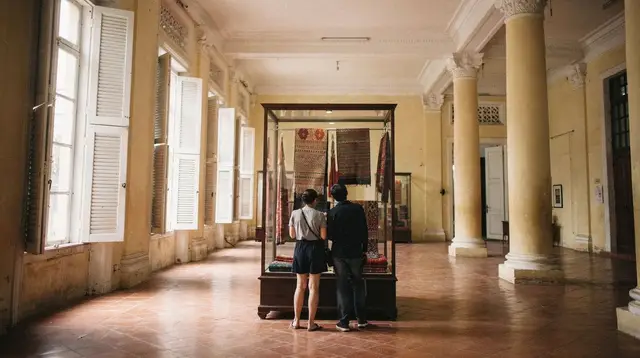
Scattered through the centre, beyond these named districts, are a handful of sights that don’t belong to any single neighbourhood theme: Hoa Lo Prison, the colonial-era jail turned museum (our Hoa Lo Prison guide has the background); the Vietnam Museum of Ethnology and the Vietnam Fine Arts Museum, both covered along with the city’s other collections in our Hanoi museums guide; the Thang Long Water Puppet Theatre; the sprawling Dong Xuan Market; and the long steel trusses of Long Bien Bridge over the Red River.
One Hanoi landmark deserves a specific caution: Train Street, where a working railway line runs directly between houses, draws visitors for the spectacle of a train passing within arm’s reach. Access has been repeatedly restricted by the authorities, and the trackside cafés along it are periodically closed down — it is not a reliably open attraction, and it should never be assumed to be freely accessible on any given day. Check current conditions before building a visit around it; our dedicated Train Street page tracks the situation.
How long to spend in Hanoi
For a first visit, two to four days is a reasonable range for the city itself, before adding time for day trips or longer excursions. Two days is enough to cover the Old Quarter, Hoan Kiem Lake and one of the Ba Dinh sights at an unhurried pace; four gives room to add the French Quarter, Tay Ho, a museum or two, and an evening for food and a water puppet show without feeling rushed.
Many visitors extend their stay by folding in a day trip to Ninh Binh or Halong Bay, or use Hanoi as a base before heading north to the mountains — our day-in-Hanoi and two-day Old Quarter itineraries lay out sequencing for shorter stays, and the day trips hub covers the options beyond the city limits.
Because Hanoi functions as a hub rather than a single stop, it’s worth deciding early whether you’re treating the city as a destination in its own right or mainly as a base. Both are reasonable approaches, and the district structure above should make it easier to judge how much time each part deserves.
Getting around the city
Hanoi’s centre is compact enough to explore a great deal on foot, particularly the Old Quarter and the lakeside area, but distances between districts — say, from the Old Quarter out to Tay Ho or Ba Dinh — are longer than they look on a map and are usually covered by some form of transport. The city has a small but growing metro network, plus an extensive bus system, though most visitors rely on ride-hailing apps for cars and motorbike taxis, or metered taxis hailed on the street.
Cyclos, the three-wheeled pedal rickshaws found around the Old Quarter, are worth treating as a sightseeing ride rather than as everyday transport, and any fare should be agreed before setting off. Our getting around Hanoi guide covers the practical detail of each option.
Arriving from outside the city, Noi Bai International Airport sits north of the centre; there is no rail or metro connection to it, so the choice is between public buses, shared minibuses, taxis or ride-hailing apps — see the airport transfer guide for how to weigh them. For onward travel, Hanoi is also the departure point for sleeper trains north toward Sapa and south along the Reunification Express line, as well as the road transfers that connect the city to Ninh Binh, the bays and the northern mountains.
The rhythm of the seasons
Hanoi sits in northern Vietnam’s humid subtropical climate zone, which means it experiences four distinct seasons — a real contrast with the more consistently tropical south of the country, and worth keeping in mind if your mental image of Vietnam comes from further south.
Winter, roughly December through February, is cool and often grey, with overcast skies and a damp chill that can feel sharper than the numbers suggest; it is not beach weather, and travellers heading further north and higher, toward Sapa, Ha Giang or Cao Bang, should expect noticeably colder conditions again, sometimes brushing freezing. Spring, roughly March into April, brings milder temperatures alongside a fine, persistent drizzle locally known as mua phun, which can linger for days without ever quite becoming a proper downpour.
Summer, roughly May through September, is Hanoi’s hot, heavily humid season and also its rainy season, marked by sudden, heavy downpours and, later in the window, a real typhoon risk that can disrupt travel and occasionally suspend cruises out on the bays — this is not the season we’d point to as ideal, whatever the temptation of school-holiday timing.
Autumn, roughly October and November, is where the city and the wider north are usually at their best: drier air, clearer skies and comfortable warmth, which is why so much travel planning around Hanoi gravitates toward these months. None of this is a substitute for checking closer to your travel dates — seasonal patterns shift year to year — but it’s the framework worth having before you commit to a season, and our best time to visit Hanoi page goes further month by month.
Practical orientation before you go
A few points of practical orientation are worth having settled before arrival rather than worked out on the ground. Entry requirements into Vietnam depend on nationality and change over time, with e-visas available to a broad range of countries and separate visa-exemption arrangements for others; rather than repeating a rule here that may be out of date by the time you travel, check the official Vietnamese immigration portal or your own government’s travel advisory directly, and see our visa guide for how the system works in general terms.
Money in Vietnam is the dong, and cash still matters for street food, markets and smaller cafés even as hotels and larger restaurants increasingly accept cards; our money and payments guide explains how to handle both. Tap water isn’t drinkable, so bottled or filtered water is the norm, though ice in established restaurants is generally fine.
Safety in Hanoi is largely about everyday friction rather than serious danger: dense traffic, the heat and humidity of summer, and the kind of low-level overcharging and opportunistic scams that cluster around busy tourist areas like Hoan Kiem Lake and the Old Quarter — our scams and pricing guide is worth a read before your first evening out. Crossing the street, in particular, follows its own logic in a city this dominated by motorbikes: a steady, predictable walking pace works far better than waiting for a gap that may never fully open.
For accommodation, the Old Quarter and the area around Hoan Kiem Lake put you closest to the main sights and the best concentration of restaurants, while Tay Ho suits travellers who prefer a quieter, more residential base; our where to stay in Hanoi guide breaks the trade-offs down by district.
Food, and why it matters here
Hanoi’s food culture is one of the strongest reasons people extend a planned two-day stop into something longer. This is the birthplace of pho as most of the world now recognises it, alongside bun cha, banh mi, cha ca, bun thang and banh cuon, and it’s also where the distinctive ca phe trung — egg coffee — was invented. Bia hoi, the fresh draught beer sold cheaply by the glass at street-corner stalls each evening, is as much a social ritual as a drink. None of this needs an itinerary of its own to appreciate; it’s woven through ordinary walking around the Old Quarter and worth building unstructured time around rather than scheduling tightly.
Beyond the city
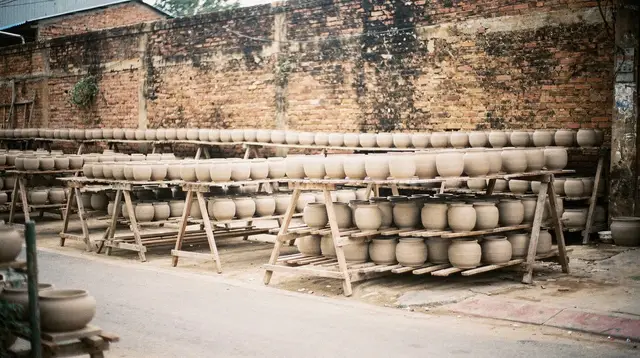
Once the city itself feels covered, Hanoi’s role as a base becomes the more useful way to think about it. Within a couple of hours are the craft villages and the Perfume Pagoda; a little further south, the karst scenery around Ninh Binh; east, the limestone bays along the coast; and north-west, the terraced hill country toward Sapa and, beyond it, the Ha Giang loop near the Chinese border. Each of those areas has its own destination page and its own set of guides, and none of them is a same-day round trip in the way some of the closer craft villages are — plan accordingly rather than trying to compress too much around a short Hanoi stay.
For a first outing outside the city, a full-day cruise on Ha Long Bay is one of the most established options, typically arranged as a return trip from Hanoi:
a full-day Ha Long Bay cruise from HanoiCloser to the city, several smaller guided outings reach specific craft villages and heritage sites that don’t otherwise get much English-language coverage — a guided visit to the Dinh Bang communal house, a combined trip to the Tho Ha rice-paper village and the Co Loa ancient citadel, or a folk-painting jeep tour out to Dong Ho:
a guided visit to the Dinh Bang communal house, a combined Tho Ha rice-paper village and Co Loa citadel tour, or a jeep tour to the Dong Ho folk-painting village.
Frequently asked questions about visiting Hanoi
Is Hanoi in North or South Vietnam?
Hanoi is in the north of Vietnam, on the Red River, well away from the more tropical south of the country. It sits roughly in the middle latitude-wise for the country’s far northern reaches, but its climate, food and culture are distinctly northern.
Is Hanoi the same place as Saigon?
No. Saigon is the former name of Ho Chi Minh City, Vietnam’s largest city, which lies well to the south. Hanoi is the country’s capital and is a separate city entirely, far too distant from Ho Chi Minh City to combine in a single trip.
Was Hanoi always the capital of Vietnam?
Hanoi has been an administrative and dynastic centre for close to a thousand years and has been the capital of modern Vietnam since the country’s reunification. Hue, in central Vietnam, was the imperial capital until 1945, before that role shifted definitively to Hanoi.
How many days should I spend in Hanoi?
Two to four days suits most first visits to the city itself, depending on how many districts and museums you want to cover. Many travellers add extra days on either side for a Ninh Binh or Halong Bay day trip, or use Hanoi as a launch point for the northern mountains.
What’s the best season to visit Hanoi?
Autumn, roughly October and November, is generally considered the most comfortable season, with drier air and clearer skies. Summer is hot, very humid and prone to heavy rain and occasional typhoons, while winter is cool and often grey rather than tropical.
Can I walk between Hanoi’s main sights?
The Old Quarter and the area around Hoan Kiem Lake are very walkable, but the city’s districts are spread further apart than they appear on a map. Reaching Ba Dinh or Tay Ho from the Old Quarter typically calls for a taxi, ride-hailing app, bus or the metro rather than a walk.
Is Train Street always open to visitors?
No. Access to Train Street has been repeatedly restricted, and the cafés along the track are periodically closed by the authorities. Check current conditions before planning a visit around it rather than assuming it will be open.
Do I need a visa to visit Hanoi?
It depends on your nationality, and the rules for e-visas and visa exemptions change over time. Check the official Vietnamese immigration portal or your own government’s travel advisory before you travel rather than relying on a fixed rule.