Explore Hanoi and northern Vietnam by area
Six ways to build a Hanoi trip: the capital's Old Quarter and lakes, the villages and pagodas just outside it, the karst rivers of Ninh Binh, the limestone bay east of the city, and the mountain regions to the northwest and northeast.
Must-visit areas
The essentials most visitors build a trip around — the Old Quarter's 36 guild streets, Hoan Kiem Lake and Ngoc Son Temple, the Temple of Literature, the Ho Chi Minh Mausoleum and Train Street.

Ha Giang: The Northeast Highlands Loop
Ha Giang is northern Vietnam's karst mountain loop, ridden pillion with a local driver, not self-driven. How it connects to Dong Van, Cao Bang and Ban.

Ha Long Bay
Ha Long Bay is one of three linked karst bays near Hanoi. Here's how Ha Long, Bai Tu Long and Lan Ha differ, and which to plan.

Hanoi: Vietnam's Capital, in the North
Hanoi is Vietnam's capital in the north, not Ho Chi Minh City. A guide to its districts, pace of visit, transport and northern seasons.

Ninh Binh: Vietnam's Inland Karst Country
Ninh Binh's limestone karst south of Hanoi is often called the inland Halong Bay — a misleading name, since there's no sea here at all.
4 guides →
Sapa Travel Guide: Rice Terraces and Hill Tribe Villages
Sapa is northern Vietnam's mountain gateway: terraced rice fields, Hmong and Dao villages, and routes onward to Fansipan, Bac Ha and beyond.
More to explore
Areas worth a dedicated half-day or more — West Lake and Tran Quoc Pagoda, Long Bien Bridge, Dong Xuan Market, and the city's museums, including the Museum of Ethnology and the Vietnamese Women's Museum.

Bai Tu Long Bay
Bai Tu Long Bay is Ha Long's quieter neighbouring bay in northern Vietnam — a separate karst seascape, not an extension of Ha Long Bay itself.

Bat Trang Ceramic Village
Bat Trang is Hanoi's historic ceramic village: kilns, potters' workshops and a lively pottery market, not a natural landscape or bay.

Cao Bang
Cao Bang travel guide: karst valleys, Ban Gioc Falls and Nguom Ngao Cave in Vietnam's far northeast, distinct from the Ha Giang loop.

Cat Ba Island: Gateway to Lan Ha Bay
Cat Ba Island, the largest in the Ha Long archipelago, is the base for exploring Lan Ha Bay, its national park, beaches and old harbour town.

Dong Van
Dong Van is the karst plateau at the heart of the Ha Giang loop, not the town of Ha Giang. What sets it apart, and how to visit it well.

Fansipan
Fansipan is Indochina's highest peak, reached from Sapa by cable car. What the ascent involves, and how it differs from visiting Sapa town.

Hoa Lu: Vietnam's Ancient Capital Before Hanoi
Hoa Lu was Vietnam's capital before Hanoi existed. Its temples honor the founding Dinh and Le dynasties amid Ninh Binh's karst valleys.
4 guides →
Lan Ha Bay: Cat Ba's Quieter Corner of the Ha Long Gulf
Lan Ha Bay sits beside Cat Ba Island in the Ha Long Gulf — quieter, beach-lined, and a distinct bay from Ha Long Bay itself.

Mai Chau
Mai Chau is a lowland valley of stilt-house villages and homestays, closer to Hanoi and gentler than Sapa or Pu Luong.

Mu Cang Chai
Mu Cang Chai's terraced rice fields change completely through the year - here's what actually shapes the view, season by season.

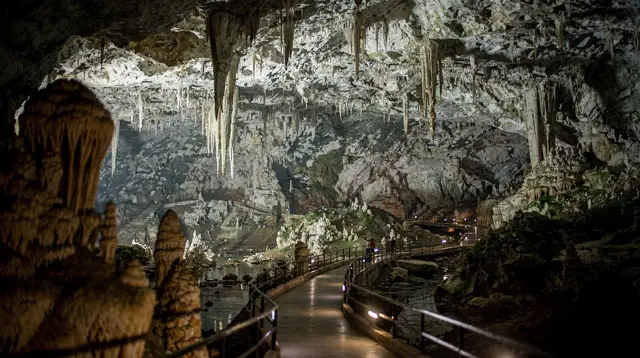
Mua Cave
Mua Cave's real draw is the stairway above it: a climb to a limestone summit over Ninh Binh's rice fields and river bends.
4 guides →
Hanoi Old Quarter: How to Find Your Way Around the 36 Streets
A street-by-street orientation guide to Hanoi's Old Quarter: its trade-street grid, how it links to Hoan Kiem Lake, and how to find your way on foot.

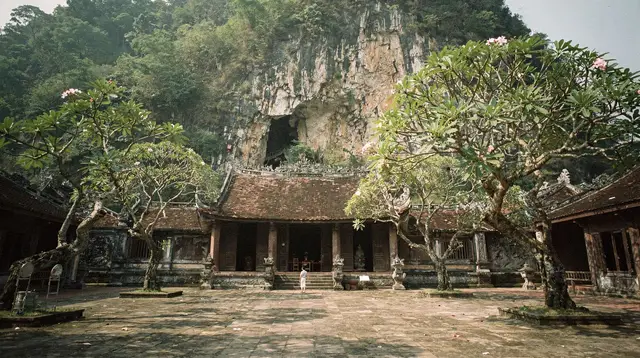
Perfume Pagoda: Hanoi's Classic Boat-and-Cave Pilgrimage
Perfume Pagoda: a rowing-boat approach and a climb to a cave sanctuary near Hanoi, and why it's not the same trip as Ninh Binh's caves.

Pu Luong: Rice Terraces and Water Wheels Beyond Sapa
Pu Luong's terraced rice fields, water wheels and Thai villages — a quieter, distinct alternative to Sapa in the northern Vietnam mountains.

Tam Coc
Tam Coc is Ninh Binh's other boat ride through karst and rice paddies, rowed by local farmers and easy to confuse with Trang An next door.
4 guides →
Hanoi Train Street: What It Is and Why Access Keeps Changing
What Hanoi's Train Street actually is, why it exists, and why access has opened and closed repeatedly - plan around uncertainty, not a fixed rule.

Trang An
Trang An is Ninh Binh's UNESCO boat route through karst caves and rivers — often confused with the nearby but different Tam Coc.
4 guides →Off the beaten path

Bac Ha and Its Weekly Market
Bac Ha's reputation rests on a weekly market drawing several ethnic minority groups. Here's how to time a visit and what other days look like.

Bai Dinh Pagoda
Bai Dinh Pagoda is one of Vietnam's largest religious complexes, near Trang An in Ninh Binh. What it is, its scale, and how to plan a visit.
4 guides →
Ban Gioc Waterfall
Ban Gioc Waterfall on the Chinese border in Cao Bang province: karst scenery, how to reach it, and why it is not a Dong Van plateau add-on.

Cuc Phuong National Park: Vietnam's Oldest Rainforest
Cuc Phuong's primary forest and endangered-species rescue centres, on the edge of Ninh Binh but a separate trip from the karst boat rides.
4 guides →
Duong Lam Ancient Village
Duong Lam is a preserved cluster of laterite houses near Hanoi — a living village, not a pottery town or a temple, and one of the region's most.

Hai Phong
Hai Phong is the port gateway to Cat Ba and Ha Long Bay, not a bay destination itself — its real role, and what's worth a stop.

Moc Chau: Tea Hills and a Blossom Season That Shifts Every Year
Moc Chau's tea plateau and orchard blossom, explained honestly: what grows there, why the flowering window moves each year, and how to read it.
Good to know about destinations around Hanoi
Hanoi and the north of Vietnam break down into six areas that suit different trip lengths and interests. The city itself centres on the Old Quarter's 36 corporation streets, Hoan Kiem Lake and Ngoc Son Temple, the Temple of Literature, the Ho Chi Minh Mausoleum complex and the One Pillar Pagoda, Train Street's narrow corridor between the tracks and the houses, and West Lake with Tran Quoc Pagoda on its shore. Long Bien Bridge, Dong Xuan Market, the water puppet theatre at Thang Long, Hoa Lo Prison and the Hanoi Opera House round out the city's landmarks, alongside street food built around bun cha, pho, banh mi, cha ca and egg coffee.
Just outside the city, the Hanoi countryside holds the ceramic village of Bat Trang, the ancient village of Duong Lam, the Perfume Pagoda pilgrimage site and the hills around Ba Vi. South of the city, Ninh Binh groups Trang An, Tam Coc, Mua Cave, the old capital of Hoa Lu, Bai Dinh Pagoda and Cuc Phuong National Park around a landscape of limestone karst that's often explored by rowing boat. East, Ha Long Bay and Cat Ba Island extend to Lan Ha Bay and Bai Tu Long Bay, with Hai Phong as the mainland gateway, and this area is usually visited by cruise, either for a single day or with a night aboard.
The northwest covers Sapa and Fansipan, the highest peak in Indochina reached by cable car, along with the terraced rice fields of Mu Cang Chai, the market town of Bac Ha, and the villages of Mai Chau, Pu Luong and Moc Chau. Further northeast, the highlands hold the Ha Giang loop, the karst plateau around Dong Van, Ma Pi Leng Pass, Cao Bang and Ban Gioc Falls. Deciding how many of these areas to combine, and how much time to set aside for the mountains versus the coast, is the main planning decision for a trip through the north, and it depends more on interests and the season than on any fixed route.
Frequently asked questions about destinations around Hanoi
How many days should I plan for Hanoi itself before heading out to the regions around it?
Two to three days let the Old Quarter, the lakes, the main temples and the museums settle in properly before adding a day trip or a multi-day excursion further out.
Is Ninh Binh a day trip or does it need an overnight stay?
Ninh Binh works well as a day trip from Hanoi covering Trang An or Tam Coc plus Mua Cave, but an overnight stay allows a slower pace and time for Hoa Lu or Cuc Phuong as well.
Do I need to choose between Ha Long Bay and Cat Ba, or can a trip combine both?
Many cruises already combine the two, since Lan Ha Bay sits between them, so the choice is usually about cruise length and whether to stay overnight on the boat rather than about picking one area over the other.
Which region should I prioritise if I only have a few extra days beyond Hanoi?
Ninh Binh suits travellers short on time since it's the closest of the karst and countryside regions, while Ha Long Bay or Sapa need a full extra day or two given the distance involved.
Is the Ha Giang loop realistic without your own motorbike experience?
Yes, many visitors do the loop as a passenger with an easy rider driver rather than riding themselves, which removes the need for motorbike experience on the mountain roads.
Ha Long Bay Cruises and Sea Excursions
Verified deep-linked GetYourGuide tours. Book through these links and we earn a small commission at no cost to you.
GetYourGuide does not provide a product photo for this activity — the image shows the meeting point, photographed by us.