Hanoi Old Quarter: A Neighborhood Guide
What is the Hanoi Old Quarter, and is it the right place to base yourself?
It's Hanoi's oldest commercial neighborhood, a grid of streets each historically tied to one trade, packed with shops, street food and nightlife around Hoan Kiem Lake. It's convenient and endlessly alive, but dense and loud around the clock, so it suits travelers who want energy over quiet.
The oldest part of Hanoi, still working
The Old Quarter is where Hanoi began as a trading town, and it’s still built around the same idea: a grid of narrow streets north and northwest of Hoan Kiem Lake, each one historically tied to a single guild and a single product. Walk it today and the pattern still shows through, even where the goods have changed. This page covers the neighborhood itself — its layout, its streets, its rhythm — not the wider city. For the French Quarter, Ba Dinh or West Lake, see the neighborhoods hub and the dedicated guides linked throughout this page.
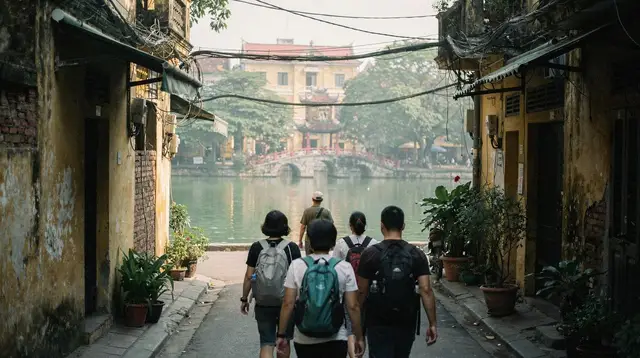
If there’s one thing to correct before arriving, it’s this: the Old Quarter is not the calm, picturesque old town that photos sometimes suggest. It’s dense, loud and in motion from early morning street vendors to late-night bia hoi corners. That’s exactly what makes it worth visiting, and exactly why it isn’t the right base for everyone.
The 36 streets, and what “guild” actually means
Hanoi’s Old Quarter is often called “the 36 streets,” a name that goes back to a historical count of guild streets, each named for the single trade once sold there — Silk Street, Silver Street, Herbal Medicine Street, and so on. The exact number and the exact specialties have shifted over generations, and a name on a street sign today doesn’t guarantee you’ll find that trade behind it. Some streets still hold close to their original specialty; others have moved almost entirely into tourist goods, backpacker gear, shoes, or the food and drink that now dominates much of the quarter.
The layout is compact and irregular by design — it grew organically around canals and old town walls, not on a planned grid — which is part of why first-time visitors find it easy to lose their sense of direction here. That’s not a problem so much as the point: the Old Quarter rewards wandering more than it rewards a fixed route.
A few streets worth knowing by name and what they’re generally associated with today:
| Street (common name) | Historical trade | What you’ll mostly find now |
|---|---|---|
| Hang Bac | Silver | Jewelry, some gold and silver trade |
| Hang Gai | Silk | Silk goods, tailoring, souvenirs |
| Hang Ma | Votive paper goods | Paper offerings, party and festival décor |
| Hang Duong | Sugar | Confectionery, dried goods |
| Ta Hien | — | Bars, bia hoi, nightlife corner |
| Hang Buom | Sails | Snacks, dried goods, bars |
Street names change from block to block, sometimes every hundred meters, which is part of what makes the area confusing to navigate by memory alone — a map app or a paper map from your hotel is more useful here than trying to memorize a route.
Hoan Kiem Lake as the anchor
Most visits to the Old Quarter start or end at Hoan Kiem Lake, the small lake that sits at the neighborhood’s southern edge. A short causeway leads to Ngoc Son Temple on a tiny island, reached by a red wooden bridge that’s one of the most photographed spots in the city. The lake itself is a genuine pause from the surrounding streets — locals walk, stretch and practice tai chi around its edge in the early morning, before the guild streets fully wake up.
On weekend evenings, the streets around the lake and running north into the guild grid close to traffic for a pedestrian zone: stalls, street performers and games spill into the road, and the crowd is a mix of tourists and Hanoi families out for the evening. It’s one of the few times the area feels genuinely walkable without watching for motorbikes at every step.
A neighborhood built for energy, not quiet
This is worth saying plainly, because it’s the most common expectation mismatch travelers arrive with: staying in the Old Quarter means staying in the loudest, busiest part of the city. Motorbike horns, street vendors’ calls, karaoke spilling from side streets and bars that run late are part of the deal, not an exception to it. Rooms facing directly onto a guild street or onto Ta Hien’s bar corner will be noisier than rooms set back on a quieter lane or facing an inner courtyard.
That’s not a reason to avoid the area — it’s a reason to choose it deliberately. If your priority is being in the middle of the food, the shopping and the nightlife with everything walkable, the Old Quarter delivers that better than anywhere else in Hanoi. If your priority is a quiet night’s sleep, the French Quarter just south of the lake or the area around West Lake tend to suit better — both are covered in their own guides rather than here. For a fuller comparison of where to sleep across the city, see the where to stay guide.
Eating in the Old Quarter
Street food is arguably the neighborhood’s biggest draw. Plastic stools on the sidewalk, a single dish done well, and a turnover that keeps everything fresh — that’s the model across much of the grid. Pho, bun cha, banh mi, cha ca and Hanoi’s own egg coffee (ca phe trung) all have well-known addresses scattered through the Old Quarter, and half the experience is simply following your nose down a side street.
Because so many stalls have no sign and no fixed address, going with a local guide the first time is a genuinely useful shortcut rather than a tourist add-on. A short evening out with a guide covers a proper cross-section — an old-school pho spot, a bun cha grill, a cocktail bar layered above a shophouse — in the time it would take to find one of those places alone.
a guided evening through the Old Quarter’s food scene, tracing a Michelin-recognized route between street stalls and sit-down spotsFor a deeper dive into what to eat and where, the street food walking tour guide and the pho and bun cha tasting guide both go further than this page can.
Shopping and the markets
Shopping in the Old Quarter ranges from the guild streets’ remaining specialty trades to souvenir shops that repeat the same handful of items block after block. Dong Xuan Market, at the quarter’s northern edge, is the largest covered market in the city — a multi-story warehouse of clothing, fabric, household goods and, on the streets around it, a busy night market that spills outward. It’s worth a visit for the scale and the atmosphere as much as for any specific purchase.
Bargaining is expected in the markets and at most souvenir stalls, though far less so in fixed-price shops, cafés and restaurants. It’s a normal, low-stakes part of shopping here rather than a confrontation, and a friendly, unhurried tone usually works better than an aggressive one.
The markets and shops guide and the Dong Xuan Market guide cover both in more detail than fits here.
Walking the Old Quarter safely
Crossing the street here takes a specific technique: step off at a steady, predictable pace and let the motorbikes flow around you, rather than waiting for a gap that may never fully appear. It feels counterintuitive the first time and becomes routine by the second day.
The Old Quarter and the streets around Hoan Kiem Lake are also where the city’s opportunistic overcharging and minor scams are most concentrated — inflated taxi meters, drink menus without prices, or a “free” gift that turns out not to be. None of it is dangerous, and violent crime is rare here as elsewhere in Hanoi, but a little awareness goes a long way. The safety and common scams guide covers the specifics.
For a slower, guided way to see the streets, a cyclo ride through the guild grid is a sightseeing experience in its own right rather than practical transport — negotiate the route and price before setting off, or book one arranged in advance through the cyclo tour guide.
What sits just outside the grid
A few landmarks that visitors often assume are inside the Old Quarter actually sit just at its edges or beyond them, and this page only flags them rather than covering them in depth:
- Train Street, where a working railway runs directly between houses, lies just southwest of the guild grid. Access has been repeatedly restricted, and the trackside cafés are periodically closed by the authorities, so it should never be treated as freely open — check current status before planning around it rather than relying on older photos or posts.
- Hoa Lo Prison, a short walk south of the grid, is covered in the Hoa Lo Prison guide.
- The Temple of Literature, Vietnam’s first university site, sits further west in Ba Dinh district and is covered in the Temple of Literature guide, alongside the rest of the Ba Dinh district guide.
- The Thang Long Water Puppet Theatre, near the lake’s northeast corner, is one of the most popular evening bookings in the city — see the water puppet show guide.
Extending a day from the Old Quarter
Because the Old Quarter is so central and so walkable, it also works well as the starting and ending point for day trips that return to the city in the evening — you can go from morning temple or village visits back to the same guild-street bars and food stalls by night. A guided visit to a historic communal house on Hanoi’s outskirts, or a day trip into the countryside around Tam Coc that loops back into the Old Quarter at the end, both fit that pattern well.
a guided half-day out to a centuries-old communal house on the edge of the city, back in time for dinner in the Old Quarter a countryside day trip that finishes with a guided return through the Old Quarter’s streetsFor those with a bit more time and a preference for walking rather than staying inside the guild grid all day, a guide-led route through the wider city center connects the Old Quarter to the French Quarter’s boulevards in a single morning or afternoon.
a local-guided walk that bridges the Old Quarter’s guild streets with the French Quarter’s colonial-era landmarksPlanning a Hanoi stay around the Old Quarter
For most first-time visitors, a stay of a couple of days centered on the Old Quarter is enough to cover its streets, food and the lake at a relaxed pace, with day trips added on either side for Ninh Binh or Ha Long Bay. If Hanoi is only one stop on a longer northern Vietnam trip, the two days in the Old Quarter itinerary and the broader one-day Hanoi highlights itinerary both build around this neighborhood as a base.
Getting into the Old Quarter from Noi Bai Airport and getting around once you’re settled are both covered separately — see the airport transfer guide and the getting around Hanoi guide for the practical side of arriving and moving through the city.
Frequently asked questions about the Hanoi Old Quarter
What does “the 36 streets” mean?
It refers to the traditional guild streets of the Old Quarter, each historically named for the single trade sold there, such as silk, silver or medicinal herbs. There were originally around 36, though the exact count and specialties have shifted over the centuries, and today the names outlast the trades they describe.
Is the Old Quarter a quiet place to stay?
No. It’s the most animated part of Hanoi, with motorbike traffic, street vendors, bia hoi corners and late-night bars running well into the evening, especially around the weekend pedestrian streets. Travelers who prioritize quiet sleep are usually happier basing themselves in the French Quarter or around West Lake instead.
Where does Train Street fit into the Old Quarter?
The stretch of railway where a working line runs between houses sits just southwest of the Old Quarter’s grid. Access to the trackside cafés has been repeatedly restricted and closed by the authorities over safety concerns, so it should never be treated as freely walkable, and it isn’t covered in detail on this page.
What’s the difference between the Old Quarter and the French Quarter?
The Old Quarter is the older commercial grid north and northwest of Hoan Kiem Lake, dense with shophouses and guild streets. The French Quarter lies just south of the lake and is built around wide colonial-era boulevards, villas and landmark buildings like the Opera House, with a calmer, more spread-out feel.
Is Hoan Kiem Lake inside the Old Quarter?
The lake sits at the Old Quarter’s southern edge and is usually treated as its anchor, with Ngoc Son Temple and its red bridge on a small island near the north shore. Most Old Quarter itineraries start or end a loop at the lake.
What can you buy on the guild streets today?
A mix of the historic trade and everything else: some streets still specialize, such as those known for silk, tin or herbal medicine, while others have shifted almost entirely to tourist goods, backpacker gear, shoes or food stalls. The pattern is more visible in some corners than others rather than a strict rule across the whole grid.
Do the streets close to traffic at night?
A pedestrian zone opens on weekend evenings around the lake and the adjoining night market streets, when cars and most motorbikes are kept out and stalls and street performers take over. Outside those hours, the guild streets carry their usual dense motorbike traffic.
Hanoi by Neighborhood
Verified deep-linked GetYourGuide tours. Book through these links and we earn a small commission at no cost to you.
GetYourGuide does not provide a product photo for this activity — the image shows the meeting point, photographed by us.