Dong Xuan Market: Hanoi's Biggest Covered Market
What is Dong Xuan Market and is it open at night?
Dong Xuan is the largest covered market in Hanoi's Old Quarter, a multi-storey wholesale and retail building rebuilt after a 1994 fire. It trades during the day, not at night — the nearby weekend night market that fills the surrounding streets is a separate, unrelated event.
A Working Market, Not a Tourist Stage
Dong Xuan Market sits at the northern edge of the Old Quarter, a short walk from Hoan Kiem Lake through the grid of the “36 streets,” and closer still to Long Bien Bridge and the Red River dyke behind it. It is the largest covered market in the district, and unlike the souvenir stalls and boutiques that line the surrounding streets, it is first and foremost a wholesale trading hub. Shopkeepers from across northern Vietnam come here to restock, and the volume of goods moving through the building on any given day dwarfs the retail trade that visitors see on the ground floor.
The current building is a rebuild. The original 19th-century market, one of the first covered markets built by the French administration on the site of an old commercial quarter, burned down in a serious fire in 1994. What stands today replaced it, and while the structure is more modern than the market’s history might suggest, its role in the neighbourhood’s daily life has not changed: this is still where much of the Old Quarter’s retail stock originates.
That working character is exactly what makes Dong Xuan worth a visit even if you buy nothing. It is one of the few places in the district where the transaction you are watching is not aimed at you. For a broader look at the boutiques, tailors and specialist shops scattered through the surrounding streets, see the guide to Old Quarter markets and shops, which covers that wider retail landscape; this page stays focused on the Dong Xuan building itself.
Ground Floor, Upper Floors: How the Market Is Organised
Dong Xuan is a multi-storey building, and like most large Vietnamese markets, it is organised loosely by category of goods rather than by a single strict plan. The exact numbering of floors and sections shifts a little over time as stalls change hands and sections get renovated, so treat any layout description as a general orientation rather than a fixed map.
The ground floor is the most food-oriented level, closest to the market’s original role as a produce and wet market. Here you will find fresh produce, meat, dried goods, spices and packaged foodstuffs, sold largely to local buyers and small restaurant owners rather than to tourists. This part of the market moves fast, is loud, and rewards a slow walk rather than a rushed one if you want to understand how it works.
The upper floors shift toward textiles, clothing, fabric by the metre, household goods and kitchenware — the wholesale core of the market’s identity. Bolts of cloth stacked floor to ceiling, ready-made clothing sold by the dozen, and household items destined for shops elsewhere in the city make up much of this trade. Toward the top of the building, the goods lean more toward toys, bags, accessories and the kind of small souvenirs that eventually end up on the tourist-facing tables of the Old Quarter.
Aisles are narrow, the building is dense, and it is easy to lose your bearings between floors. That disorientation is part of the experience rather than a flaw to plan around — most visitors do a loop rather than trying to see everything systematically.
What You Can Actually Buy Here
Because Dong Xuan is a wholesale market first, much of what is on offer is sold by volume: bolts of fabric, cartons of household goods, boxed inventory for shopkeepers. But retail purchases in smaller quantities are entirely normal too, and this is where individual visitors tend to focus their attention.
| Category | Where to find it | Typical buyer |
|---|---|---|
| Fresh produce, meat, dried goods | Ground floor | Local households, small restaurants |
| Fabric, textiles, ready-made clothing | Middle floors | Tailors, shopkeepers, individual buyers |
| Household goods, kitchenware | Middle floors | Local households, retailers |
| Toys, bags, accessories, souvenirs | Upper floors | Retailers, individual visitors |
Bargaining is the norm across the retail sections, as it is throughout the Old Quarter. This page deliberately does not quote prices, since they shift with the season, the volume you buy, and how the negotiation goes — treat any number you hear elsewhere as a starting point for a conversation, not a fixed rate. The same caution applies to hours and the scale of the market: rather than quoting a stall count or an opening time that may already be out of date, plan to arrive earlier in the day when trading is at its most active, and expect the pace to slow as the day goes on.
If bargaining and market etiquette feel unfamiliar, the wider guide to tourist scams and prices in Vietnam is a useful companion before you visit any of the Old Quarter’s markets, Dong Xuan included.
The Confusion to Avoid: This Is Not the Night Market
The single most common mix-up involving Dong Xuan is with the weekend night market that fills the streets nearby on Friday, Saturday and Sunday evenings. They are not the same thing, and treating them as interchangeable will send you to the wrong place at the wrong time.
Dong Xuan Market is a daytime, indoor, wholesale-and-retail building. Its rhythm follows normal business hours, and by evening the building itself has largely wound down. The weekend night market, by contrast, is an open-air street event that takes over the pedestrianised streets around the Old Quarter after dark, focused on street food, clothing stalls, games and the atmosphere of a busy night market rather than on wholesale trade. It is a separate operation, run on the street rather than inside the Dong Xuan building, and it exists on a completely different schedule — weekend evenings only, not every day.
If what you are after is the classic Hanoi night-market atmosphere — food stalls, crowds, string lights, browsing after dinner — that experience is covered in the Hanoi nightlife guide, not on this page. If you turn up at Dong Xuan after dark expecting that scene, you will find a quiet, mostly shuttered building instead.
Combining a Visit with the Rest of the Old Quarter
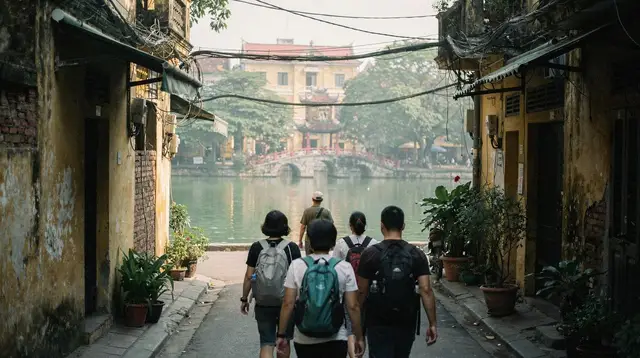
Dong Xuan sits at a natural pivot point in the Old Quarter, and most visitors fold it into a longer walk rather than treating it as a standalone destination. Heading north from Hoan Kiem Lake through the Old Quarter’s street grid, the market marks a natural endpoint before continuing on toward Long Bien Bridge or looping back through the food and craft streets closer to the lake.
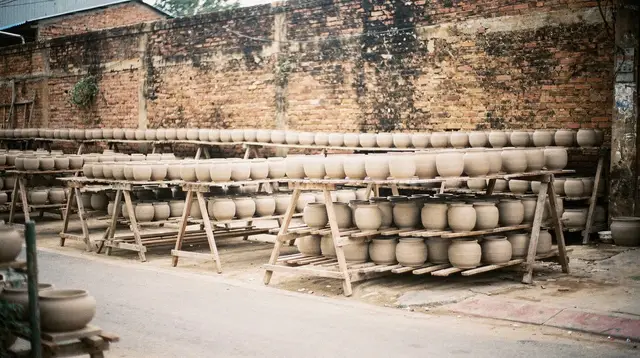
For visitors interested in the craft and textile side of what Dong Xuan sells wholesale, a day trip to the villages that supply some of this trade — ceramics at Bat Trang or the wider network of craft villages near Hanoi — adds useful context to what you see on the market floors. A guided version of that connection, shopping in the Old Quarter alongside a look at how goods move through it, is exactly what a structured market tour offers:
a guided shopping walk through the Old Quarter’s local markets and boutiques, which pairs a visit to Dong Xuan’s retail floors with the smaller specialist shops nearby, run by a local guide who can help with navigation and negotiation.
Photographers often find Dong Xuan’s dense stalls, stacked goods and working atmosphere more rewarding than the more polished tourist shops elsewhere in the district. If that is the draw, consider a Vespa-based photo tour that stops at local markets and street scenes around the city as a way to cover Dong Xuan alongside other photogenic corners of Hanoi in a single outing, or, for a more rural counterpoint to the market’s urban bustle, a photography-focused trip to Tho Ha village on the Red River, outside the city centre.
Anyone planning to shoot portraits in traditional dress against the market’s backdrop should also look at the separate guide to ao dai photoshoots in Hanoi, which covers where and how that is usually arranged.
When to Go: Morning Trade vs Afternoon Quiet
Dong Xuan’s rhythm follows the working day, and the market feels different depending on when you turn up. Early in the day, trading is at its busiest: shopkeepers and restaurant buyers move through the ground floor picking up produce and dried goods, and the upper floors are already stacking new stock for the day’s retail trade. This is the version of the market worth seeing if the working, wholesale character described above is the draw — carts being unloaded, goods sorted into cartons, the ordinary business of restocking a district’s worth of shops happening in front of you.
By the afternoon, the pace slows. Some stalls close earlier than others, foot traffic thins out, and the building’s energy shifts from urgent trading to a quieter retail trickle. That slower version can still be worth a visit if bargaining calmly, without the press of wholesale buyers around you, appeals more than the morning’s bustle — but do not expect the same density of activity. Either way, remember that Dong Xuan closes up well before evening, so it should not anchor a plan built around a late-afternoon or evening arrival in the Old Quarter.
Getting There from Elsewhere in the City
Most visitors reach Dong Xuan on foot, as part of a longer loop through the Old Quarter rather than as a dedicated trip. From further afield — Tay Ho and West Lake, or the sights around Ba Dinh district such as the Ho Chi Minh Mausoleum and the Temple of Literature — the market is a reasonable add-on to a day that already includes central Hanoi, rather than a destination that justifies crossing the city on its own. Visitors staying near Hoan Kiem Lake or in the Old Quarter itself have the easiest approach, since the market sits within easy walking distance of most Old Quarter accommodation.
For a wider sense of how a first day in the city might be sequenced around a stop here, the guide to Hanoi’s half-day city tour options and the broader Hanoi museums guide both cover nearby stops that pair naturally with a Dong Xuan visit, whether self-guided or as part of a structured itinerary.
Visitors who prefer their first exposure to the Old Quarter’s markets to be guided rather than solo might also consider a guided tour covering both the Old Quarter’s daytime markets and the nearby night market, which puts Dong Xuan’s daytime trading in context alongside the separate evening event described above.
Practical Notes
Dress for a working market rather than a shopping mall: the aisles are narrow, the floors can be uneven or wet near the fresh produce section, and it gets warm and crowded on the upper floors. Bring cash in small denominations for retail purchases — card payment is not the norm at individual stalls — and keep valuables secure in the denser aisles, as you would in any crowded market anywhere in the world.
If you are combining Dong Xuan with a wider first day in the city, the guide to getting around Hanoi covers how to reach the Old Quarter from elsewhere, and the guide to Hanoi tickets and entrance arrangements is useful for nearby sights that do require advance booking, unlike Dong Xuan itself, which has no ticketed entry. For visitors building a fuller day around this corner of the Old Quarter, the Temple of Literature and the wider Ba Dinh sights make a natural pairing earlier in the day, before the market’s afternoon trading winds down.
Two more affiliate-linked options worth considering if craft villages and communal architecture interest you alongside the market’s wholesale trade:
a combined trip to the Tho Ha rice-paper village and the ancient citadel of Co Loa, both of which give useful context on the craft and trading traditions that Dong Xuan’s wholesale floors still connect to today.
Dong Xuan Market: Questions Travelers Ask
Is Dong Xuan Market open at night?
No. Dong Xuan itself is a daytime market. The stalls and streets around it host a separate weekend night market on Friday, Saturday and Sunday evenings, which is a different event covering street food, clothing and souvenirs rather than the wholesale trading that happens inside Dong Xuan during the day.
What is sold at Dong Xuan Market?
Textiles and clothing, fabric by the metre, household goods, kitchenware, dried food and spices, fresh produce and meat on the ground floor, plus toys, accessories, luggage and souvenirs on the upper floors. Much of the stock is sold wholesale to shopkeepers and traders as well as retail to individual shoppers.
How many floors does Dong Xuan Market have?
The market is a multi-storey building with a ground floor and several upper floors, each broadly organised around a category of goods, though the exact layout and numbering can vary depending on renovations and which entrance you use.
Is Dong Xuan Market the same as the Old Quarter night market?
No. Dong Xuan is a permanent covered building trading during the day. The Old Quarter’s weekend night market is an open-air street event on nearby pedestrianised streets, active only on weekend evenings, and it is not run inside the Dong Xuan building.
Can I bargain at Dong Xuan Market?
Bargaining is normal here, as in most of the Old Quarter’s markets, and is expected on unmarked goods, especially for retail-sized purchases rather than wholesale lots. A polite, friendly negotiation is the norm rather than an aggressive one.
Is Dong Xuan Market worth visiting for a tourist, or just for wholesale buyers?
Both. Traders come for wholesale volume, but the market is equally interesting for visitors wanting to see how the Old Quarter actually functions day to day, browse fabric and household goods, and get a break from the more tourist-oriented shops on the surrounding streets.
How do I get to Dong Xuan Market from the Old Quarter?
It sits at the northern edge of the Old Quarter, an easy walk from Hoan Kiem Lake through the “36 streets,” and is a natural stop when combining a walk toward Long Bien Bridge or the Red River dyke.
Dong Xuan Market and Hanoi's Markets
Verified deep-linked GetYourGuide tours. Book through these links and we earn a small commission at no cost to you.
GetYourGuide does not provide a product photo for this activity — the image shows the meeting point, photographed by us.