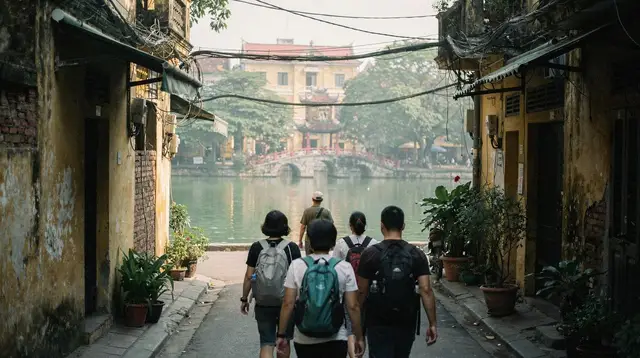
Old Quarter Markets and Shops: A Street-by-Street Guide
Why do Old Quarter street names all start with Hang?
Hang means merchandise or goods in Vietnamese, and each street was historically home to a single guild selling one product, such as silk, silver or paper. The pattern dates back centuries and still shapes what is sold where, even though many streets have since diversified.
Reading the Old Quarter’s Guild Streets
Hanoi’s Old Quarter is often described as “the 36 streets,” and the number is more than a nickname — it points to a real system. For roughly a thousand years, this pocket of the city just north of Hoan Kiem Lake was organized by trade guilds, each occupying its own street and selling a single category of goods. That structure has thinned out and blurred over the decades, but it never fully disappeared, and understanding it turns an otherwise overwhelming tangle of lanes into something you can actually navigate.
This guide is about reading that logic, not about naming individual shops or negotiating prices. It explains why the streets are laid out the way they are, what kinds of goods still cluster where, and how to plan a walk through them. For the largest single retail space in the area, a purpose-built market hall rather than a street pattern, see the separate Dong Xuan Market guide. Practical matters like bargaining technique and currency exchange are covered generally by the site’s money and payments guide and are outside the scope of this page.
Why the Streets Are Named “Hang Something”
If you spend even an hour on a map of the Old Quarter, one pattern jumps out: an enormous number of street names begin with the word Hang. This is not a family name, a founder’s name, or a linguistic coincidence — Hang simply means “merchandise” or “goods” in Vietnamese. A street named Hang Bac was the silver-trading street; Hang Gai was the silk street; Hang Thiec was tinware. The prefix was a functional label, closer in spirit to calling a street “Silver Street” or “Silk Street” in English, and it stuck.
This naming convention is one of the most commonly misunderstood details of the district. Visitors sometimes assume the repeated “Hang” is decorative or archaic, when in fact it is the single clearest key to how the whole quarter was organized. Guilds from villages around the Red River Delta, including craft communities such as Bat Trang and Duong Lam, sent traders to set up shop in the capital, and each guild claimed a street close to the citadel and the lake. Over time, the streets kept their trade names even as the guilds themselves moved, closed, or diversified.
What the Trade Streets Still Sell
Not every Hang street trades in its original goods today — some have shifted almost entirely toward tourism, food, or general retail — but many still show a strong echo of their historic specialty, and a walk through several of them in sequence is the best way to feel the pattern rather than read about it.
| Historic trade | What to expect today |
|---|---|
| Silk and textiles | Tailoring, fabric by the metre, ready-made clothing |
| Silver and jewelry | Jewelry shops, engraving, metalwork |
| Paper goods and votive offerings | Ritual paper items, stationery, printed goods |
| Toys and decorations | Seasonal decorations, novelty items, party goods |
| Herbal medicine | Dried herbs, traditional remedies, tea |
| Tin and metalware | Household metal goods, hardware |
| Bamboo and rattan | Baskets, mats, woven household items |
Rather than treating this as a checklist of streets to tick off, it works better as a way of noticing: when a block suddenly smells of dried herbs, or a run of shopfronts is stacked with paper lanterns and joss items, that is not random clustering — it is the guild system still visible under the surface of a modern tourist district.
Where the Goods Come From
The guild streets have never operated in isolation from the countryside around Hanoi, and that link still shapes what turns up on the shelves today.
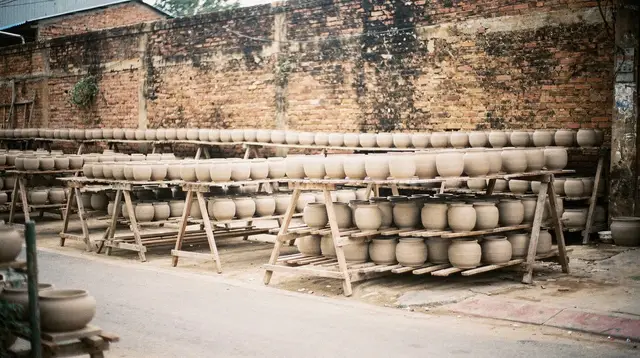
Silk sold on the old textile streets traces back to weaving villages in the Red River Delta, covered together with the district’s incense trade in the site’s silk and incense villages guide; ceramics and pottery displayed in Old Quarter shopfronts often originate in Bat Trang, the ceramics village a short trip from the city; and some of the household goods and laterite-brick craftsmanship on display echo building traditions still visible in the preserved houses of Duong Lam. Seeing the production side of that chain, rather than only the retail end inside the Old Quarter, is possible on a single outing:
a day trip pairing the rice-paper-making village of Tho Ha with the Co Loa Ancient Citadel outside HanoiTrips like this make the guild-street pattern easier to read on return, since the raw materials and workshop techniques seen in the village context explain why certain streets in the Old Quarter cluster around a single craft in the first place.
A Logic to Walk, Not a List to Shop
Because the trade-street system rewards slow observation more than a fixed itinerary, the most useful approach is a loop rather than a straight line. Starting from the Old Quarter edge nearest Hoan Kiem Lake, a walker can cut north through several trade streets in sequence, noticing how the goods on display shift block by block, before looping back via a different set of streets. This is also roughly how a guided walking food tour or an evening scooter food tour moves through the district, though those tours are built around eating rather than browsing shopfronts.
For visitors who want the trade-street logic explained on the ground rather than pieced together from a map, a guided option removes the guesswork:
a half-day shopping walk through the Old Quarter’s local markets and specialty streets with a guide who explains what each block traded historicallyThis kind of tour is particularly useful on a first visit, since it clusters the most legible trade streets into a manageable route and explains details — like why a street sells paper offerings rather than souvenirs — that are easy to miss when walking alone.
Photographing the Trade Streets
The dense shopfronts, stacked goods, and narrow balconies of the guild streets are also one of the most photogenic corners of Hanoi, and several tour operators build entire outings around that fact rather than around shopping itself. A slow-moving vehicle tour through the district and its surrounding lanes gives a different vantage point than walking:
a Vespa-based photo tour that threads through the Old Quarter’s narrow trade streets with a local guide who knows the best anglesFor a more staged, portrait-style session that uses traditional dress against the district’s older shopfronts and colonial-era facades, see the separate ao dai photoshoot guide, which covers that specific style of shoot in detail.
Photographers looking to extend the theme beyond the Old Quarter itself, into the craft villages that historically supplied these guild streets, have another option:
a day trip built around photographing the ceramics and pottery-making village of Tho Ha outside HanoiThat excursion pairs naturally with the trade-street walk, since it shows the production side — a village workshop — of goods that end up sold on streets like the ones described above. The Old Quarter’s own ceramics connections are covered separately in the Bat Trang ceramic village guide.
Where the Trade Streets Sit in the District
The guild streets cluster most densely in the blocks between Hoan Kiem Lake and Dong Xuan Market to the north, with a handful extending east toward Long Bien Bridge and west toward the edge of the French Quarter. This puts the trade streets within easy walking distance of several other Old Quarter anchors, including Hoa Lo Prison to the southwest and the district’s museums, covered in the general Hanoi museums guide.
Because the area is compact, it slots easily into a short city stay. A first-time visitor following the two-day Old Quarter itinerary or the tighter one-day Hanoi highlights itinerary can fold a trade-street walk into an existing loop around the lake without adding a separate excursion. Details on choosing a base nearby are covered in the site’s general where to stay in Hanoi guide.
Tet and Festival Shopping on the Trade Streets
The guild-street pattern is easiest to see year-round, but it sharpens dramatically around Tet, the Lunar New Year, when the streets historically tied to decorations and votive paper goods fill with red-and-gold ornaments, calligraphy scrolls, and ritual offerings in the weeks before the holiday. The general Tet Lunar New Year in Hanoi guide covers the citywide picture, including transport and closures, while the site’s broader festivals and public holidays guide sets Tet alongside the calendar’s other dates.
For a shopping walk specifically, the practical effect is that a street selling mostly stationery or general goods for most of the year can turn, for a few weeks, into something closer to its historic single-trade identity — one of the clearest times to observe the guild system in action rather than infer it from a quieter shopfront.
Beyond Shopping: The Streets After Dark
The trade-street pattern does not disappear once the shopfronts close for the evening — many of the same streets simply shift function, filling with plastic stools, drink stalls, and street food as the Old Quarter’s nightlife takes over. A short walk through streets that were selling silk or tinware by day can look completely different a few hours later, which is part of what makes repeat visits to the same blocks worthwhile rather than repetitive.
For a slower, more traditional counterpoint to the retail bustle, the district’s water puppet theatre sits a short walk from the lake and offers an evening activity that draws on the same guild-era craft traditions — puppetry among them — that once filled these streets.
Practical Notes on Visiting
A few practical points round out how to approach the trade streets, without straying into bargaining technique or currency conversion, which the site covers elsewhere:
- Best walking pace: treat it as a slow browse, not a route to complete — the value is in noticing the pattern, not covering every street.
- Footwear and traffic: pavements are often used for parked motorbikes or spillover displays, so walking partly on the street is normal; stay alert to traffic as described in the general getting around Hanoi guide.
- Combining with other activities: the area pairs naturally with a cyclo ride around Hoan Kiem for orientation, followed by a walk on foot through specific trade streets.
- Scams and overcharging: this district is one of the areas flagged in the site’s general safety and common scams guide; none of that detail is repeated here.
- What to book ahead: if a shopping or photo tour is part of a tight schedule, check the general what to book ahead in Hanoi guide for timing advice.
- Pairing with the covered market: a trade-street walk combines naturally with a stop at Dong Xuan Market at one end of the route, since the covered market and the open-air guild streets show two different formats of the same district’s commercial life.
- Orientation before you set out: visitors staying near the lake can use the site’s wider Old Quarter guide for a district overview before narrowing in on the trade streets themselves.
A Different Way to See the Same Streets
Not every visitor wants to walk the trade streets on their own terms, and the district’s narrow lanes lend themselves to several other formats that cover some of the same ground with a different focus. A cyclo route through the Old Quarter that extends toward the mausoleum and Train Street shows the trade streets as one stop among several rather than the sole focus of the outing — access to the trackside cafés there is periodically restricted, so it is best treated as a viewpoint rather than a fixed stop:
a cyclo tour linking the Ho Chi Minh Mausoleum area, Train Street and the Old Quarter’s trade streets in a single routeFor visitors whose main interest is food rather than shopfronts, several of the walking and street-food tours referenced earlier in this guide cover overlapping ground after dark, with the full range of group and private formats set out in this site’s dedicated street food walking tour guide.
Frequently Asked Questions About the Old Quarter’s Trade Streets
Why do so many Old Quarter street names begin with Hang?
Hang is the Vietnamese word for merchandise, not a place name or a coincidence. Each street was historically the base of one guild trading a single good, and the name recorded that trade.
Are the guild streets still specialized today?
Some remain close to their original trade, such as streets known for silk or for votive paper goods, while others have shifted toward tourist souvenirs, cafés or general retail as the district’s economy changed.
What is the difference between the Old Quarter’s market streets and Dong Xuan Market?
The guild streets are open-air commercial streets spread across the district, each tied to a trade, while Dong Xuan is a single large covered market building at the northern edge of the Old Quarter with its own dedicated guide.
Is this a good area for buying souvenirs?
Yes, the density of small shops makes it one of the easiest places in Hanoi to browse handicrafts, textiles and everyday goods side by side, though this guide does not cover bargaining or currency exchange.
How much time should I set aside to explore the market streets?
A slow walk through several guild streets, with stops to browse, typically takes two to three hours; pairing it with a guided walking or food tour can extend a visit to half a day.
Is the area walkable, or is it better to explore by cyclo or motorbike?
The core guild streets are compact and best explored on foot, since narrow lanes and heavy motorbike traffic make walking both practical and part of the experience; a cyclo ride is a sightseeing option rather than a practical way to shop.
Do the shops sell only to tourists, or do local people still use these streets?
Both. Many streets remain working wholesale and retail hubs for Hanoi residents and businesses, alongside the tourist-facing shopfronts, which is part of what distinguishes the Old Quarter from a purely curated shopping district.
What is the best time of day to visit for shopping and photos?
Mid-morning to early afternoon gives the best light and the fullest range of open shops, while early evening brings a livelier street-food atmosphere but fewer market stalls.
Dong Xuan Market and Hanoi's Markets
Verified deep-linked GetYourGuide tours. Book through these links and we earn a small commission at no cost to you.
GetYourGuide does not provide a product photo for this activity — the image shows the meeting point, photographed by us.