Ao Dai Photoshoots in Hanoi: What to Expect
What is an ao dai photoshoot in Hanoi?
It is a portrait session in which a studio or outfit rental shop dresses visitors in an ao dai, Vietnam's traditional tunic, then photographs them either indoors or against an outdoor backdrop such as a lake, temple gate or old street. The outfit, hairstyling and a set of edited photos are typically bundled together, and the same tradition is worn by men in a looser, less fitted cut as well as by women.
A tradition worn by everyone, not a costume for tourists
The ao dai is Vietnam’s national dress, and one of the most persistent points of confusion among first-time visitors is treating it as a garment exclusively for women. It is not. Women’s ao dai is fitted through the chest and waist, split into two long panels worn over ankle-length trousers, and it is the version most often seen in photographs and on wedding invitations. The men’s ao dai follows the same basic silhouette, a long tunic over trousers, but cut looser through the body and usually in plainer, darker fabric. Both versions appear at weddings, Tet celebrations, school ceremonies and, increasingly, in the photoshoots that studios and outfit-rental shops across Hanoi offer to visitors.
For a visitor, an ao dai photoshoot is less about history and more about a practical, popular activity: put on the outfit, have your hair done, and walk away with a set of portraits in a setting that reads unmistakably as Vietnam. It slots naturally into a day that already includes the Old Quarter or the wider city, and it works for solo travellers, couples and families alike, since children’s sizes and matching family sets are widely available.
How the booking generally works
Providers range from small tailoring shops that also rent finished outfits, to photography studios built specifically around outfit-plus-photoshoot packages, to guided tours that combine a costumed walk with a local photographer. The core sequence is similar across all of them:
- Choosing the outfit. Rental racks typically hold a range of sizes, colours and patterns for both the women’s fitted cut and the men’s looser cut. Trying on more than one before deciding is normal and expected.
- Hair and light styling. Many packages include simple hairstyling suited to the outfit, sometimes with an accessory such as a conical hat (non la) or a headpiece. Full makeup is not always included and is worth asking about directly.
- The shoot itself. This happens either in a studio with backdrops and controlled light, outdoors against a real setting, or as a combination of both within the same booking.
- Editing and delivery. Providers differ in how many edited images they hand over and in what format, digital files, prints, or both. Because packages and inclusions vary this much from one provider to the next, this guide does not quote a rental price, a session length or a fixed number of photos; confirm those details directly with whichever studio or tour you book.
Studio versus outdoor setting
Both approaches are common in Hanoi, and neither is objectively better; the choice comes down to what kind of image a visitor wants to bring home.
| Studio session | Outdoor setting | |
|---|---|---|
| Backdrop | Curated sets, controlled lighting, consistent results | Real streets, lakes, temples or gardens; weather-dependent |
| Weather risk | None | Depends on season; humid summers and drizzly spring days can affect timing |
| Feel of the photos | Polished, portrait-studio look | More candid, place-specific, often busier in frame |
| Typical combination | Often paired with a short outdoor move afterwards | Sometimes paired with a guided walk or a wider photo tour |
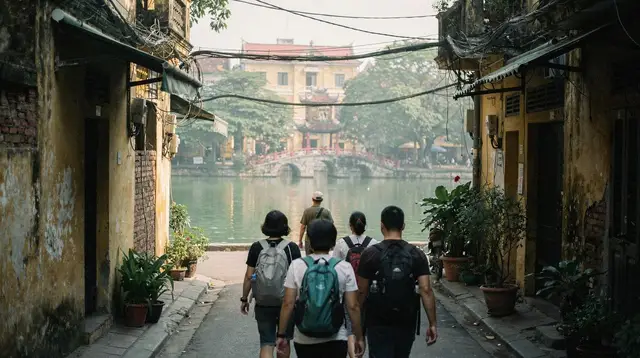
An outdoor session close to central Hanoi commonly uses the lanes and shopfronts around Hoan Kiem Lake or a corner of the Old Quarter as a backdrop, since both are close to where most studios operate and offer instantly recognisable Hanoi scenery. That overlap is why this page points toward, rather than replaces, the site’s separate guide to the Old Quarter’s markets and shopping streets, which covers browsing and buying in that district in its own right; an ao dai session there is one possible use of that neighbourhood, not the main reason to visit it.
Guided options that build photography into a wider outing
Rather than booking a standalone studio slot, some visitors prefer a tour built around photography from the start, where a guide handles both the outfit logistics and the choice of locations. A Vespa-based photo tour with a local guide is one version of this, moving between a handful of photogenic corners of the city over a single outing.
Others lean toward the countryside: a guided photo tour through craft villages near Hanoi trades city streets for pottery workshops and rural lanes, while a photography-focused day trip to Tho Ha village centres on a single riverside village known for its old communal architecture. For visitors who simply want a guided session with someone who knows how to direct a portrait, a guided photography tour with a local photographer is built around that alone, without a fixed theme.
These guided formats differ from a studio rental mainly in pacing and in who chooses the backdrop. A studio session puts the visitor in control of timing and location within the shop’s own sets or a short walk nearby; a guided tour moves through several locations across a longer outing, with the photographer setting the route.
Practical points worth knowing before you book
Hair, makeup and accessories are not always bundled. Ask specifically what a package includes rather than assuming; some rental shops charge separately for hairstyling, and full makeup is often an add-on rather than a default.
What to wear underneath matters. Because the women’s ao dai is fitted through the torso, a plain, close-fitting top and leggings work best under it; the matching trousers are normally supplied by the studio along with the tunic itself.
Weather shapes the outdoor option. Hanoi’s spring drizzle and the heavy downpours of its summer rainy season can force an outdoor session indoors or reschedule it, while the dry, clear stretch from around October to November tends to give the most reliable outdoor light. A seasonal read on the city before booking an outdoor slot is worth the few minutes it takes.
Groups and families are well served. Because the men’s and women’s ao dai differ in cut, family or couple bookings commonly mix both styles, and matching or complementary colours across a group is a common request that most providers can accommodate.
This is one of many things to do nearby. An ao dai session pairs naturally with a broader look at what else the shopping and photoshoot category covers in Hanoi, or with a wider day exploring things to do across the city.
Where an ao dai session fits into a Hanoi day
Because sessions vary in length by provider, it helps to think in terms of what surrounds the shoot rather than a fixed schedule. A common pattern pairs the studio or outdoor session with a walk through the Old Quarter’s 36 streets, a stop at Dong Xuan Market, or an evening water puppet performance, all within easy reach of the central studios that offer these bookings. Visitors staying in the French Quarter or elsewhere in the city centre will generally find a studio within a short ride, since most cluster near the Old Quarter and the lake.
For anyone building a longer stay around the capital, this activity is easiest to slot into the first or second day, before heading out to destinations further afield such as Ninh Binh or Ha Long Bay, since it depends on being based in the city rather than on the road. Details on lodging near the relevant studios and neighbourhoods are covered in the site’s separate guide to where to stay in Hanoi, and a broader list of what to book in advance versus on arrival sits in what to book ahead in Hanoi.
Light, timing and the quieter hours
Because most providers leave the schedule flexible, the choice of when to shoot matters more than how long the session runs. Early morning, before the Old Quarter’s shopfronts fully open and its lanes fill with delivery traffic and shoppers, tends to give calmer backdrops and softer light than the middle of the day, when the sun sits high and the streets are busiest. Late afternoon offers a similar advantage from the other direction, with warmer light and crowds beginning to thin before the dinner rush. Neither slot is fixed by any studio’s schedule, so this is a preference to raise when booking rather than a rule to expect automatically; a studio built around indoor sets is naturally less affected by any of this than an outdoor session is.
Season plays a role too, on top of the weather points already noted above. The Old Quarter and the lake area are busiest with both visitors and locals during the run-up to Tet, Vietnam’s lunar new year, when flower markets and festive decorations fill the streets; some visitors specifically seek this atmosphere out for an ao dai session, since the dress is traditionally worn during the holiday, while others prefer to avoid the added crowds. Either way, the guide to Tet in Hanoi is worth a look before booking a session anywhere near that period.
Backdrops beyond the Old Quarter
The Old Quarter is the most-used outdoor setting simply because it sits closest to where most studios operate, but it is not the only option, and several providers offer or accept requests for locations elsewhere in the city centre. West Lake, Hanoi’s largest lake, gives a quieter, more open waterside alternative to the lake paths around Hoan Kiem, with Tran Quoc Pagoda as a recognisable backdrop; the same neighbourhood is covered in the site’s guide to the One Pillar Pagoda and Tran Quoc Pagoda.
Further west, the grounds around the Temple of Literature, Vietnam’s first university, and the wider Ba Dinh district around the Ho Chi Minh Mausoleum offer a more formal, architectural setting, though access rules at ceremonial sites can be stricter than at a public street or park, so it is worth confirming with a studio or guide whether a given location permits a costumed shoot before counting on it.
The Imperial Citadel of Thang Long, a UNESCO World Heritage site in the same part of the city, is sometimes mentioned by visitors researching backdrops as well, for the same reason: check first, since not every historic or ceremonial site treats a photoshoot the same way it treats an ordinary visit.
For visitors who want a single walk that doubles as both a costumed shoot and a broader orientation to the district, the wider guide to the Old Quarter covers the layout of its 36 streets beyond the markets-and-shopping angle already linked above, which helps in picking a corner that suits the kind of photo wanted, whether that is a narrow shophouse lane, a market corner, or the open space around the lake itself. A walking tour through the Old Quarter’s hidden corners is one way to scout these spots with a local guide even outside of a dedicated photoshoot booking.
Pairing the shoot with food and an evening out
Because a costumed session tends to sit at one end of a day rather than filling it, many visitors build the rest of the day around it. An Old Quarter street food walking tour pairs naturally with an afternoon shoot, and a group street food tour of the Old Quarter covers much of the same ground the photos were taken in, on foot and at a slower pace.
For an evening that follows a session, a stop at a bia hoi corner for cheap draft beer or a cup of Hanoi’s egg coffee rounds out the day without requiring any further planning, and the site’s broader Hanoi nightlife guide covers what else the area offers once the light has gone and a studio session would no longer be practical outdoors.
Ao dai photoshoots in Hanoi: frequently asked questions
Is the ao dai only worn by women?
No. It is a national dress worn by both men and women, with the women’s version fitted through the bodice and the men’s version cut looser and plainer. Studios and rental shops typically offer both, which makes the activity suit couples, families and mixed groups equally well.
Do I need to bring my own ao dai?
Most visitors rent rather than buy, since rental shops keep a range of ready-made sizes and colours for both the women’s and men’s cuts. A custom, made-to-measure ao dai is a separate, slower process usually chosen by visitors who plan to wear the outfit again later, not something arranged for a same-day photoshoot.
Where do these photoshoots take place?
Either in an indoor studio with backdrops and controlled lighting, outdoors against a real setting such as a lake, temple or old street, or as a combination of both within a single booking. The choice generally comes down to the kind of image a visitor wants.
Can the Old Quarter be used as a backdrop?
Yes, its streets and shopfronts are a popular outdoor setting and sit close to many central studios. It works alongside the Old Quarter’s own attractions rather than replacing a proper visit to its markets and shopping streets, which this site covers separately.
Does the price include hair and makeup?
It depends on the provider. Some packages bundle basic hairstyling into the outfit rental, others charge it as an add-on, and full makeup is often separate. Confirm exactly what is included before booking, since this varies too much between shops to generalise.
How long does a session take?
This varies by provider and by whether the shoot is studio-only or includes a move outdoors, so no fixed duration applies across the board. Ask the specific studio or tour operator what to expect for their package.
What should I wear or bring underneath?
A plain, fitted top and leggings work well under the women’s ao dai, since it is close-fitting through the torso; the trousers that pair with the tunic are usually supplied by the studio. A change of comfortable clothes for before and after the session is generally all else that is needed.
Is this suitable for families and mixed groups?
Yes. Because the men’s and women’s cuts differ, family and group bookings commonly mix both styles, sometimes in matching or complementary colours, and children’s sizes are widely available.
Street Food Tours and Vietnamese Cuisine Tastings
Verified deep-linked GetYourGuide tours. Book through these links and we earn a small commission at no cost to you.
GetYourGuide does not provide a product photo for this activity — the image shows the meeting point, photographed by us.