Bia Hoi: Hanoi's Street-Corner Draught Beer
What is bia hoi?
Bia hoi is fresh draught beer brewed without preservatives and meant to be drunk the same day it's made, sold from kegs at simple street-corner bars in Hanoi's Old Quarter. It's a way of brewing and serving beer, not a single brand, and it's distinct from bottled or canned industrial lager.
What bia hoi actually means
Ask three people in Hanoi what bia hoi is and you’ll likely get three answers pointing at the same thing from different angles: a drink, a place, and a moment. All three are right, but the word itself has a precise meaning that’s worth pinning down before you go looking for it, because it’s one of the more commonly misunderstood terms among visitors to the Old Quarter.
Bia hoi literally translates to something like “gas beer” or “draught beer” — hoi meaning gas or air, a reference to how it’s kept and dispensed rather than to any flavour. It refers to a style and method of brewing: a light lager-style beer, brewed in small or mid-sized batches, without the preservatives used in bottled or canned beer, and meant to be sold and drunk the same day it leaves the tank. It’s the opposite of a shelf-stable product.
There’s no bia hoi corporation shipping a single recipe across the country. Instead, dozens of small breweries around Hanoi and other northern towns produce their own batches, and each one is distributed daily to a network of small bars and street corners that sell it fresh, keg by keg, until it runs out — at which point that corner is done for the day, no matter how early or late that happens to be.
This is the single most useful thing to understand before you go looking for it: bia hoi is not a brand you can ask for by name in the way you’d ask for a specific bottled lager. It’s closer to a category, the way “draught” describes a serving method more than a flavour. Two bia hoi corners a few streets apart in the Old Quarter may be pouring beer from entirely different small breweries, with noticeably different character from one keg to the next, and that’s normal rather than a sign that one is “real” and the other isn’t.
How it differs from bottled Vietnamese beer
Most of the beer visitors encounter in Hanoi restaurants, convenience stores and bars is bottled or canned industrial lager — pasteurised, shelf-stable, produced at scale, and largely indistinguishable in character from mass-market lager anywhere else in the world. It’s what you’ll be served by default at most sit-down restaurants and hotel bars.
Bia hoi sits apart from that entire category. Because it isn’t pasteurised and isn’t designed to sit on a shelf, it can’t be bottled, exported, or stocked in the same way. It exists almost entirely within a short, local supply chain: brewed in the city or its outskirts, delivered in kegs early in the day, and served that same day at small, informal bars until the keg is empty. That short life is exactly what gives it its particular lightness and freshness compared to bottled beer — and also why you won’t find it, in its genuine keg form, packaged for take-away or shipped between cities.
If you’re used to craft beer culture elsewhere, it helps to think of bia hoi less as a specific style in the IPA-or-stout sense and more as a production philosophy — fresh, local, unfiltered of preservatives, sold quickly, and inseparable from where and how it’s poured.
The corner-bar ritual
The place bia hoi is sold matters as much as the beer itself, and it’s really the reason the word has become shorthand for a whole slice of Hanoi street life rather than just a drink.
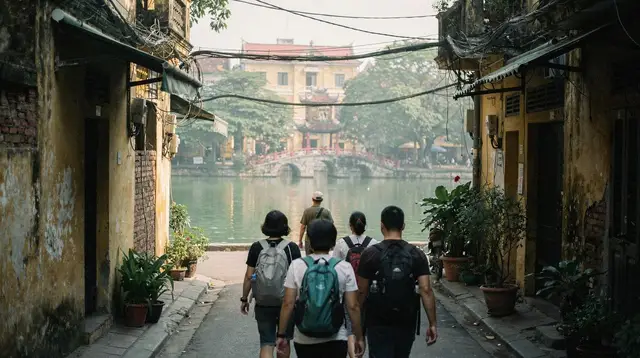
A typical bia hoi spot in the Old Quarter is unassuming almost to the point of being easy to miss if you don’t know what you’re looking for: an open shopfront or a stretch of pavement, a keg or two set up somewhere visible, and rows of low plastic stools spilling out toward the street, often in the same primary-coloured plastic used across Hanoi’s entire street-eating scene. There’s rarely a sign that says “bia hoi” in large letters, rarely a printed menu, and rarely a host to seat you. You take whichever stool is open, someone brings you a glass, and that’s the extent of the formality.
What makes it distinct from a bar in the Western sense is the social pattern around it. Bia hoi corners fill up in the early evening with a mix of office workers finishing their day, neighbours who’ve known each other for years, and the occasional group of travellers who’ve wandered in. Tables — when there are tables at all — are small, low, and often shared with strangers by necessity rather than choice. Conversation flows across stools. Nobody lingers over a menu, because there generally isn’t one beyond the beer itself and maybe a short list of simple snacks. It’s a genuinely communal, unhurried way of spending an hour or two, closer in spirit to a neighbourhood gathering than a night out at a bar.
This is also why bia hoi is so tightly woven into the wider culture of eating on the street in Hanoi. The low stools, the lack of formality, the shared space with strangers, and the expectation that you’ll simply take what’s available rather than reserve or order elaborately are exactly the codes covered in more general terms in our guide to eating at plastic stools on Hanoi’s streets — bia hoi corners are really one specific, beer-focused expression of that same broader street culture.
What to expect when you sit down
Because bia hoi bars are informal by design, the experience is fairly consistent from corner to corner even though the beer itself varies:
- No reservation, no queue system. You simply find an open stool. If there isn’t one, you either wait a moment or move to the next corner — bia hoi spots tend to cluster, especially around the edges of the Old Quarter, so there’s rarely just one option in a given street.
- Simple ordering. A glass appears, or you gesture for one; refills follow the same way. Language isn’t usually a barrier, since the transaction is about as simple as it gets.
- Snacks, sometimes. Some corners offer a short list of things to nibble on — peanuts, dried squid, or other simple bar snacks — though this varies enough by location that it’s not something to expect everywhere.
- A short window. Because the beer is fresh and unpasteurised, a corner sells what it has for the day and then it’s finished — sometimes surprisingly early. This isn’t a late-night bar scene in the way you might expect; the busiest, most reliable window tends to be the early-to-mid evening.
- Turnover, not lingering service. Nobody hurries you off your stool, but nobody hovers either. It’s a self-paced, low-key kind of drinking, closer to the atmosphere of a market stall than a cocktail bar.
None of this comes with a fixed price tag, an official opening time, or a guaranteed alcohol percentage worth quoting as fact — all three vary by corner, by brewer, and by day, and treating any single figure as reliable would be misleading. What’s stable is the format: fresh, cheap by local standards, and built entirely around sitting rather than standing, moving, or hurrying.
Bia hoi as part of a wider food culture
Bia hoi rarely stands alone as an activity — it’s usually one stop in a longer evening spent moving between street stalls, and it sits naturally alongside other Hanoi staples like pho and bun cha or the city’s distinctive egg coffee culture earlier in the day. If you’re building an evening around it, it pairs well with wandering through the older, narrower lanes near Hoan Kiem Lake and simply seeing which corners are busiest.
For visitors who’d rather not hunt for the right corner alone, or who want the context and stories behind what they’re drinking and eating, a guided evening is often the easiest way in. A local guide can also help make sense of the broader street-food landscape beyond bia hoi itself — you can compare that structured approach with independent wandering in our guide to choosing between a private and a group food tour.
an evening street food tour through the Old Quarter with a local guide, which typically threads together several stops — often including a bia hoi corner — with a guide who can explain what you’re drinking and eating as you go.
For something more specifically after dark, a scooter-based evening food tour covers more ground and more corners than walking alone would, which suits travellers keen to sample several bia hoi spots and food stalls in one night rather than settling into just one. See our fuller evening scooter food tour guide for how that format works.
If beer isn’t the focus and you’d rather build the evening around Hanoi’s other signature drink, a hands-on coffee workshop covering six different brews is a good complementary stop earlier in the day, before the bia hoi corners fill up in the evening.
Those who prefer a one-on-one pace rather than a group can look at a private street food tour with a dedicated guide, which allows more time to linger at a bia hoi corner rather than moving on a fixed group schedule.
A note on safety and moderation
Because bia hoi is unpasteurised and doesn’t carry the shelf-stability of bottled beer, it’s worth applying the same common-sense caution you would with any fresh, local product you haven’t tried before — starting with a smaller glass rather than assuming it will sit the same way as a familiar bottled lager. Most travellers have no issues at all, but individual tolerance varies.
It’s also worth remembering that tap water in Hanoi isn’t drinkable, so if you’re alternating drinks through an evening out, stick to bottled or filtered water rather than tap between rounds. For broader guidance on staying comfortable and avoiding common pitfalls around the Old Quarter after dark, see our guide to safety and common scams in Hanoi.
On the practical side, bia hoi is typically a cash transaction at small, informal stalls that won’t take cards — worth knowing before you sit down. Our guide to money and payments in dong covers what to carry for exactly this kind of small, street-level spending, and our note on tipping in Vietnam is useful if you’re unsure whether it’s expected at an informal bar like this (generally, it isn’t, though rounding up is common).
Where bia hoi fits into an Old Quarter evening
If you’re mapping out where to spend an evening in the Old Quarter, bia hoi corners are worth building in as a stop rather than a destination in themselves — a place to pause between a walk through the older lanes and whatever comes next, whether that’s more street food, a water puppet show, or simply continuing to wander. For a fuller sense of what else the neighbourhood offers after dark, our Hanoi nightlife guide covers the wider picture beyond bia hoi specifically, and our roundup of street food tours lists the range of guided options if you’d rather not navigate the corners solo.
For a deeper read on the cultural side of the drink — its history and its place in Hanoi life beyond the practical how-to covered here — see our related piece on bia hoi and Hanoi’s craft beer culture.
Bia hoi vs. other Hanoi drinking options
| Option | Format | Where to find it | Best for |
|---|---|---|---|
| Bia hoi | Fresh, unpasteurised keg beer, sold same-day | Street corners across the Old Quarter | A cheap, social, low-key evening stop |
| Bottled/canned beer | Pasteurised, shelf-stable | Restaurants, bars, convenience stores | Consistent taste, no time pressure |
| Egg coffee (ca phe trung) | Espresso with whipped egg yolk cream | Dedicated cafés, mostly daytime | A signature Hanoi drink experience earlier in the day |
| Craft/microbrewery beer | Small-batch, bottled or on tap in dedicated bars | Standalone craft beer bars | Travellers wanting a more curated beer menu |
This table is a rough orientation rather than a ranking — most visitors end up trying several of these across a trip, and bia hoi’s appeal is less about the beer competing on quality with the alternatives and more about the specific, unhurried street ritual around it.
Frequently asked questions about bia hoi in Hanoi
Is bia hoi a brand of beer?
No. Bia hoi describes a method — fresh, unpasteurised, keg-brewed beer sold and finished the same day — used by many small breweries and corner bars across Hanoi, not one company or recipe.
How strong is bia hoi?
It’s a light, low-alcohol lager-style beer, generally weaker than most bottled Vietnamese beers, though the exact strength varies by batch and vendor and isn’t something to treat as fixed or guaranteed.
Where do you drink bia hoi in Hanoi?
At small open-fronted corner bars in and around the Old Quarter, identifiable by low plastic stools, a keg, and a steady turnover of glasses rather than by a shopfront sign or formal menu.
How much does a glass of bia hoi cost?
It’s famously cheap by local standards, but exact prices move with the season and the specific corner, so this guide doesn’t quote a figure — check current pricing on arrival rather than relying on a fixed number.
Do you need to book bia hoi in advance?
No. It’s an informal, walk-up experience with no reservations, no fixed opening ritual, and no ticket — you simply take an open stool at a corner that has one.
Is bia hoi safe to drink for visitors?
Most travellers drink it without issue, but because it’s unpasteurised and freshly kegged rather than bottled, some people prefer to start with a small glass and judge from there, the same caution worth applying to any unfamiliar fresh, local product.
What’s the etiquette at a bia hoi corner?
Take whatever stool is free, order by pointing or a simple gesture if language is a barrier, expect to share the corner with locals rather than have your own table, and treat it as a shared, unhurried street moment rather than a formal bar visit.
Is bia hoi the same as the beer served in restaurants?
Not usually. Restaurants and bars more often serve bottled or canned industrial beer; bia hoi’s short shelf life and keg format mean it’s mostly a street-corner and specialist bia hoi bar product rather than a restaurant staple.
Shows and Nightlife in Hanoi
Verified deep-linked GetYourGuide tours. Book through these links and we earn a small commission at no cost to you.
GetYourGuide does not provide a product photo for this activity — the image shows the meeting point, photographed by us.