Pho vs Bun Cha: Understanding Hanoi's Two Signature Dishes
What is the difference between pho and bun cha in Hanoi?
Pho is a beef or chicken noodle soup eaten at any hour, built around a slow-simmered broth. Bun cha is grilled pork patties and belly served over cold rice vermicelli with a dipping broth, eaten mainly at lunch. They are different meals with different rhythms, not variations on the same dish.
Two dishes get named more than any others when people talk about eating in Hanoi, and they could hardly be more different in how they are eaten. Pho is a broth, served hot, eaten at any hour of the day. Bun cha is grilled meat over cold noodles, tied to the middle of the day, and known well beyond Vietnam because of a single, widely photographed lunch. Understanding what separates them is a useful way into the wider question of how food actually works in Hanoi — not as a checklist of dishes, but as a set of habits, hours and neighborhoods.
Two dishes, two different rhythms of the day
Pho is built around patience. A broth is simmered for hours from beef or chicken bones, aromatics and spices, then ladled hot over flat rice noodles with thin slices of meat and a modest handful of herbs — usually spring onion and coriander, sometimes a few slivers of ginger. It is a dish that rewards a clear, well-balanced broth over a heavily dressed bowl, and it is sold from the earliest hours of the morning right through to late at night. There is no single correct time to eat pho in Hanoi; stalls do brisk trade at breakfast, but a bowl at 9pm draws no comment either.
Bun cha runs on a different clock. Small patties and slices of pork belly are grilled over charcoal until the edges char, then dropped into a warm, faintly sweet-and-sour dipping broth studded with pickled papaya and carrot. Cold rice vermicelli sits on the side, along with a plate of fresh herbs, and the whole thing is assembled at the table rather than served pre-combined. Bun cha is, culturally, a lunch dish. Many of the best-known spots in the Old Quarter are busiest between late morning and early afternoon, and some wind down well before dinner. Planning a bun cha stop around midday, rather than treating it as an evening option, matches how the dish is actually eaten locally.
The smell alone tells you which one you’re near: pho announces itself through steam and star anise drifting from a simmering pot, bun cha through charcoal smoke rising from a grill set up right on the pavement.
Why bun cha became a household name abroad
Bun cha had been a fixture of Hanoi’s lunch scene for generations before it drew international attention. That changed in 2016, when a sitting US president shared a modest bun cha meal with a well-known American chef at a no-frills Hanoi restaurant, and the resulting photographs and footage circulated worldwide. The moment turned one specific address into a minor landmark, but it’s worth separating the dish from that single visit: bun cha was never a rare or ceremonial food waiting to be discovered — it was, and remains, an everyday lunch that plenty of Hanoi residents eat weekly, at whichever stall is nearest their office or home. The publicity changed who knew the dish existed, not how central it already was to the city’s eating habits.
A regional dish, not a national one
A common assumption among first-time visitors is that pho is a single, fixed recipe found identically across Vietnam. It isn’t. Hanoi pho and the pho served in Ho Chi Minh City are two distinct regional traditions, shaped by different climates, different trade histories and different tastes, and treating them as the same dish with a different city name misses a real distinction that Vietnamese diners take seriously.
The Hanoi version tends toward a clearer, lighter broth, built on a narrower, more restrained set of seasonings, and served with a smaller selection of herbs — the dish is meant to taste clean rather than layered. The southern style, associated with Ho Chi Minh City and the Mekong Delta, generally leans sweeter, often with a splash of hoisin or chili sauce stirred in, and arrives with a large side plate of fresh herbs, bean sprouts and lime for the diner to add at will.
Neither version is the “authentic” one and the other a variant; they developed in parallel as two branches of the same idea, in the way that regional dishes often diverge across a long, narrow country. Vietnam stretches roughly 1,650 km from its northern border to the Mekong Delta, and food changes noticeably along that length — pho is one of the clearest examples of it happening within a single dish’s name.
Where these dishes fit into a day of eating in Hanoi
Neither pho nor bun cha is usually one course among several — each is typically its own complete meal, eaten at a dedicated stop rather than folded into a longer spread. That matters for planning: rather than treating pho and bun cha as two items to check off in one sitting, it makes more sense to think of them as two separate stops that can anchor different parts of the day.
A common shape for a first full day looks something like this, without needing to chase specific addresses, since finding a good bowl or a good grill is less about a single legendary spot and more about reading a busy stall with a fast turnover of local customers:
| Time of day | Typical stop | What defines it |
|---|---|---|
| Morning | A pho stall | Hot broth, fast turnover, often standing or on low stools |
| Midday | A bun cha spot | Grilled meat, assembled at the table, busiest hours of the day |
| Afternoon | A coffee break | Slower pace, often ca phe trung or black coffee over ice |
| Evening | A wider street food circuit | Small plates, grazing across several stalls rather than one sit-down meal |
This is a pattern, not a rule — pho at dinner or bun cha eaten a little later than midday are both entirely normal — but it reflects how most visitors and residents actually move through a day of eating in the city.
Reading a good stall rather than chasing a famous one
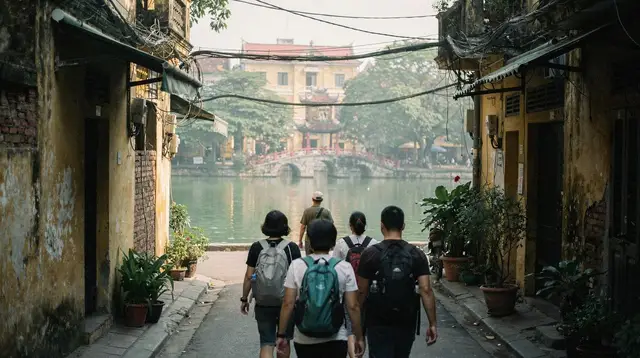
Because both dishes are sold at thousands of stalls across Hanoi, the more useful skill than memorizing an address is learning to read a stall on sight. A short queue of local customers, a broth or grill that’s visibly busy rather than sitting idle, and turnover fast enough that food isn’t reheated are better signals than a sign claiming to be the original or the best. This applies equally around Hoan Kiem Lake and the surrounding Old Quarter lanes, where both dishes are sold in dense concentration alongside dozens of other specialties.
For visitors who’d rather have context supplied than work it out stall by stall, a guided walk is the more efficient route into both dishes and the wider food scene around them. A guided walking tour through the Old Quarter with tastings built in covers pho and bun cha alongside other stops in a single outing, with a local guide explaining what’s being eaten as you go.
A more food-focused alternative is a small-group street food tour built specifically around tastings, which tends to move at a slower pace across more individual dishes. For a tighter focus on the Old Quarter itself, an Old Quarter food tour built around eight separate tastings covers a lot of ground without requiring any planning on the visitor’s part.
Coffee as the natural pairing, not a separate errand
Hanoi’s food culture doesn’t stop at pho and bun cha, and coffee deserves a mention here because of how tightly it’s woven into the same daily rhythm. Ca phe trung, the city’s own invention — a thick, whipped egg coffee — and simple black coffee poured over ice are both common ways to close out a meal or take a slow break between stops, in the way a Hanoi resident might sit for twenty minutes at a pavement café between morning errands.
Visitors who want a structured introduction to the wider coffee culture, rather than picking a café at random, can join a hands-on coffee workshop covering six different brewing styles, which fits naturally either before a pho breakfast or after a bun cha lunch.
What this page deliberately leaves out
This page is about understanding the two dishes and where they sit in a day of eating, not about naming specific restaurants, listing prices or specifying quantities and cooking times — those details shift too often, and vary too much stall to stall, to serve a guide like this well. For a curated walk past specific stalls and addresses, see the guide to a street food walking tour through the Old Quarter.
For visitors who want the lower, more informal side of Hanoi eating — plastic stools, shared tables, no menu in English — the guide to eating at plastic stool stalls covers that etiquette directly. And for a broader sense of how Hanoi’s food differs from what’s served further south, the comparison of northern and southern Vietnamese food picks up where the pho comparison above leaves off.
Fitting food into a wider Hanoi itinerary
Eating well in Hanoi rarely needs a dedicated day set aside for it; both pho and bun cha slot naturally around sightseeing rather than competing with it. A pho breakfast works well before a morning spent around the Temple of Literature or the sites of Ba Dinh district, and a bun cha lunch sits comfortably between a morning in the Old Quarter and an afternoon exploring West Lake or the French Quarter.
Evenings are better suited to a wider grazing circuit than to a single sit-down meal, and the evening scooter food tour is one way to cover more ground after dark without planning a route yourself.
Visitors building a longer stay around food, rather than a single day of it, might also look at the vegetarian food tour guide for plant-based options, or compare a private versus group food tour before booking anything. However the day is shaped, the core distinction holds: pho is the all-hours soup that Hanoi eats without thinking twice about the time, and bun cha is the grilled lunch that, since 2016, the rest of the world has come to recognize by name — two dishes, two different rhythms, both essential to understanding how the city eats.
Frequently asked questions about pho and bun cha in Hanoi
Is Hanoi pho the same as the pho served in Ho Chi Minh City?
No. Hanoi pho and southern pho are two distinct regional traditions. The Hanoi version favors a clearer, lighter broth and a narrower set of herbs, while the southern style tends to be sweeter and comes with a large plate of fresh herbs and bean sprouts added at the table.
What made bun cha internationally famous?
A widely photographed visit by a sitting US president to a modest bun cha restaurant in Hanoi in 2016 brought international attention to the dish, though it had already been a lunchtime staple in the city for generations.
Can I eat pho for dinner in Hanoi?
Yes. Unlike bun cha, which is strongly associated with the midday meal, pho is sold from early morning stalls through to late-night spots, and locals eat it at any hour without it being seen as unusual.
Do pho and bun cha use the same noodles?
No. Pho uses flat rice noodles served hot, submerged in broth. Bun cha uses thin round rice vermicelli, served cold and separate from the warm dipping broth that holds the grilled meat.
Is bun cha spicy?
Not inherently. The dipping broth is a balance of sweet, sour and savory notes rather than a chili-forward sauce, though sliced chili and garlic are usually left on the table for anyone who wants more heat.
Which dish should I try first in Hanoi?
There is no wrong order. Many visitors try pho on arrival, since it is easy to find at any hour, then time a midday stop for bun cha, since it is traditionally a lunch dish and some well-known spots wind down by evening.
Are pho and bun cha part of the same meal?
Not usually. Each is typically a complete, standalone meal rather than one course among several, which is part of why exploring both means planning around two separate stops rather than one long sitting.
Street Food Tours and Vietnamese Cuisine Tastings
Verified deep-linked GetYourGuide tours. Book through these links and we earn a small commission at no cost to you.
GetYourGuide does not provide a product photo for this activity — the image shows the meeting point, photographed by us.