Vietnamese Coffee and Egg Coffee in Hanoi: The Full Guide
What is Vietnamese egg coffee and is it served cold?
Egg coffee (ca phe trung) is a Hanoi invention made by whisking egg yolk, sugar and condensed milk into a thick foam that sits on top of hot robusta coffee. It is normally served warm, in a small cup often kept over hot water, and it is a different drink from the iced milk coffee (ca phe sua da) found all over Vietnam.
Coffee culture in Hanoi, and why egg coffee stands apart
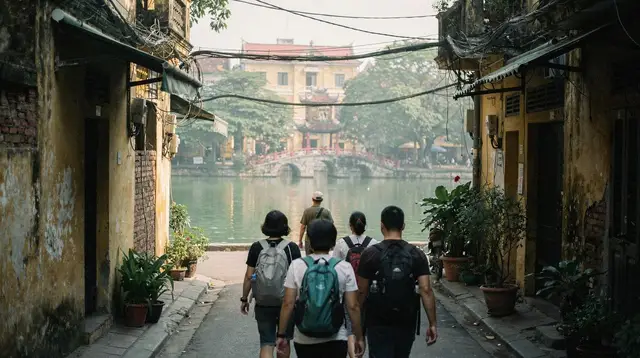
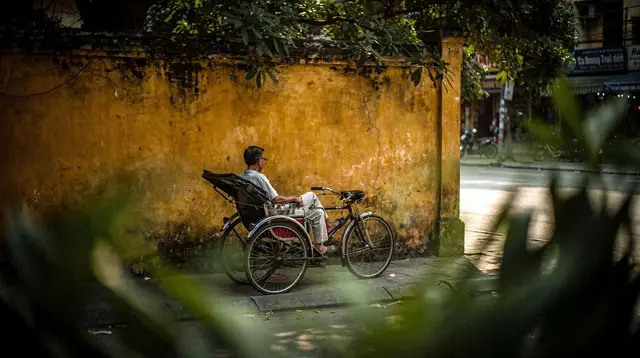
Coffee in Hanoi is less a drink than a pace of life. Low plastic stools face the street, a phin filter drips slowly on top of a glass, and the point of stopping is to sit and watch the traffic rather than to move on quickly. That is true across the Old Quarter and much of Hanoi, and it is worth understanding before diving into egg coffee specifically, because egg coffee is one style among many, not a synonym for Vietnamese coffee as a whole.
This guide covers two things. First, the everyday coffee culture of Hanoi - what robusta and the phin filter mean in practice, and how the standard iced milk coffee works. Second, and in more detail, egg coffee itself: what ca phe trung actually is, how it differs from the iced version most visitors already know, and what to expect when a cup arrives at the table. It stays on coffee.
For the wider street-food and street-drinking scene of the Old Quarter - noodle stalls, draught beer on the corner, low stools and all - the street food walking tour guide, the bia hoi guide and the plastic stool eating guide cover that ground properly. Cocktail bars and mixology are a different scene again and sit outside what this page sets out to do.
Robusta, the phin filter and how Hanoi actually drinks coffee
Vietnam is one of the world’s largest coffee producers, and most of what is grown and consumed domestically is robusta rather than arabica. Robusta beans carry more caffeine and a more bitter, heavier profile than arabica, which is one reason Vietnamese coffee is so often served with condensed milk rather than drunk black - the sweetness balances a bitterness that would otherwise dominate a cup on its own.
The standard brewing method is the phin, a small metal filter that sits directly on top of a cup or a glass. Ground coffee goes in, a perforated plate presses it down, and hot water is poured over the top. The coffee then drips through slowly, taking several minutes to finish. There is no shortcut to this: the phin is not a machine, and part of ordering coffee the Hanoi way is simply waiting while it drips, glass by glass, at the next table as much as at your own.
The single most common order across the country is ca phe sua da: hot coffee dripped through a phin directly over a layer of condensed milk at the bottom of the glass, then stirred and poured over ice once it has finished dripping. It is strong, sweet, and served cold, and it is what most visitors picture when they think of Vietnamese coffee. Its hot equivalent, without the ice, is ca phe sua nong. Black coffee, with no milk, is ca phe den (iced) or ca phe den nong (hot), and it is noticeably more bitter without the condensed milk to cut it.
None of this is egg coffee. It is worth being clear about that distinction early, because the two are easy to conflate from outside Vietnam: egg coffee is a specific, separate drink, associated specifically with Hanoi, and it does not replace or improve on the everyday iced milk coffee - it is simply a different thing.
What egg coffee (ca phe trung) actually is
Ca phe trung, egg coffee, is made by whisking egg yolk with sugar and usually a little condensed milk into a thick, pale, custard-like foam. That foam is then spooned or poured over a small amount of strong robusta coffee, and the two are not stirred together before drinking - the foam sits on top, and a spoon is used to eat through it down to the coffee underneath, the way one might approach a dessert rather than a drink.
The texture is the whole point. Done well, the foam is light and airy rather than heavy, closer to a whisked meringue or a warm custard than to raw egg, and it is usually the case that reviewers who taste it blind, without knowing the ingredients, do not identify egg as a component at all. The coffee beneath it is bitter and concentrated, which keeps the whole thing from becoming simply a sweet dessert - the contrast between the sweet foam and the bitter coffee underneath is what the drink is built around.
Egg coffee is generally credited to a cafe in Hanoi in the 1940s, at a time when fresh milk was in short supply and whisked egg yolk was used as a substitute to give coffee body and richness. The drink stayed associated with that origin and with Hanoi specifically, rather than spreading into the everyday coffee order used nationwide the way ca phe sua da has. Ordering egg coffee outside Hanoi is possible in tourist-facing cafes, but it remains, at heart, a Hanoi speciality rather than a Vietnam-wide standard.
The confusion to avoid: egg coffee is not served over ice
This is the point most worth getting right before ordering. Ca phe sua da, the everyday iced milk coffee described above, is cold, poured over ice, and drunk quickly in hot weather. Egg coffee is a different drink built around a different idea, and it is normally served hot or warm, not iced. In many cafes the small cup is placed inside a bowl or dish of hot water, precisely so the foam does not cool and deflate before it is finished - which only makes sense if the intention is a warm drink held at the table, not a cold one to be drunk on the move.
Treating the two as interchangeable, or expecting an iced egg coffee because that is how Vietnamese coffee is often pictured, sets up an odd first impression: a warm, thick, dessert-like drink is a different experience from a cold, sweet, refreshing one, and neither is a substandard version of the other. Some cafes have started offering egg coffee over ice as a variant, but that is a departure from the traditional form, not the traditional form itself, and the classic warm version is the one worth trying first if the aim is to understand what the drink actually is.
| Drink | Served | Main components | Texture |
|---|---|---|---|
| Ca phe sua da | Cold, over ice | Robusta, condensed milk | Thin, poured, stirred |
| Ca phe den | Cold or hot, no milk | Robusta only | Thin, bitter, black |
| Ca phe trung (egg coffee) | Hot or warm | Robusta, egg yolk, sugar, condensed milk | Thick foam over coffee, eaten with a spoon |
What to expect when you order
A cup of egg coffee is small, and it is meant to be taken slowly - the foam on top holds its texture better sipped and spooned over several minutes than drunk quickly, and the coffee underneath is strong enough that most people would not want a full glass of it in one go. A spoon usually comes with the cup for exactly this reason: the top layer is closer to eating than drinking, at least at first, before it has mixed further into the coffee below.
Cafes vary in how sweet they make the foam and how strong they brew the coffee underneath it, and that balance is a matter of house style rather than of one version being correct and another wrong. This guide deliberately does not rank cafes, name a “best” address, or quote prices, because those details shift and a wrong or outdated claim is worse than none - what matters here is understanding the drink well enough to order it with confidence and recognise a well-made cup when it arrives, wherever that happens to be.
For a guided introduction rather than trial and error, a coffee tasting or a hands-on class covers both the everyday styles and egg coffee in one sitting, with someone explaining the phin, the robusta, and the whisking technique as you go.
a guided coffee tasting through Hanoi’s different coffee stylesTrying it hands-on
Beyond simply ordering a cup, a coffee-focused class or workshop is a practical way to understand why egg coffee behaves the way it does - how long the yolk and sugar need to be whisked to hold their foam, how strong the coffee underneath needs to be brewed so it does not disappear under the sweetness, and how the two are meant to be eaten together rather than stirred into one. It also gives a controlled setting to try several styles side by side, which is harder to arrange cafe by cafe on your own.
a Vietnamese coffee making class covering both the phin and egg coffeeFor a more intimate version of the same idea, a small workshop format run out of a single cafe space usually means more time with fewer people, and a chance to ask questions about technique as the foam comes together rather than watching from a distance.
a small-group coffee workshop covering several brewing styles in one sittingEgg coffee has also travelled beyond Hanoi’s cafes into day trips further afield, where the same idea shows up as a stop alongside a boat ride and a walk through karst scenery outside the city - useful if a single coffee-focused outing in Hanoi is not the only thing on the itinerary.
Where egg coffee culture sits in the wider city
Coffee shops and street-side coffee stools in Hanoi tend to cluster in and around the Old Quarter, where narrow shopfronts open directly onto the street and low stools spill out onto the pavement. That overlaps heavily with the wider street-food and street-drinking scene covered elsewhere on this site: the evening scooter food tour guide and the pho and bun cha tasting guide both move through similar streets, just built around food rather than coffee.
If the plan is a longer outing that treats food and drink as one continuous experience rather than separate stops, those guides are the natural next step from this one, and the vegetarian food tour guide covers how that scene adapts for plant-based diets.
For the city’s other defining drink - fresh draught beer sold by the glass on street corners, a completely different tradition from coffee but occupying the same low-stool, street-facing culture - see the bia hoi guide, and for the plastic stool as a piece of street furniture and social ritual in its own right, the plastic stool eating guide goes into that in more depth. None of that is cocktail or bar culture, which sits outside what any of these guides set out to cover; egg coffee and bia hoi are both daytime and early-evening traditions built around cheap glasses and street seating, not a late-night bar scene.
More general things-to-do listings for the city, including other food and drink experiences, sit on the Hanoi activities page and the dedicated street food tours category, and a broader read on how food and drink culture in the north differs from the rest of Vietnam is covered in the Vietnamese coffee culture piece and the bia hoi feature on the blog.
Choosing between a tasting, a class and a self-guided stop
Not every visitor wants the same level of involvement, and the right choice depends mostly on how much time is available and whether the goal is tasting or learning technique.
| Option | Best for | Time needed |
|---|---|---|
| Order egg coffee at a cafe | A quick, self-guided taste with no booking | 20-40 minutes |
| Guided coffee tasting | Sampling several styles with context, no hands-on brewing | 1.5-3 hours |
| Coffee making class or workshop | Learning the phin and the egg-whisking technique directly | 2-4 hours |
| Day trip including an egg coffee stop | Combining coffee with a wider outing outside the city | Full day |
A guided tasting suits visitors who want to understand what they are drinking without committing to a full class, while a hands-on workshop makes more sense for anyone who wants to be able to explain, or even recreate, the technique afterwards. Either way, going in with a small group rather than a large one tends to mean more direct contact with whoever is guiding the session, which matters more for a technique-based activity like this than it might for a purely sightseeing outing - the group versus private tour comparison covers that trade-off in more general terms if it is relevant to how the rest of a trip is being planned.
Etiquette and a few practical notes
Coffee in Hanoi is typically drunk slowly, and sitting for a long stretch over one small cup, especially with egg coffee, is entirely normal rather than something that needs to be rushed. Refills are not usually offered the way they might be elsewhere; a fresh order is simply a new cup. As with food elsewhere in the city, cash remains the more reliable way to pay in smaller street-side cafes, even though larger, more tourist-oriented coffee shops increasingly accept cards - a point covered in general terms in the customs and etiquette guide for visitors new to the city.
Because this page deliberately avoids naming or ranking specific cafes, and avoids quoting prices or review scores that shift over time, the most reliable way to find a well-regarded spot on the day is to ask locally, check current listings, or simply follow a guided tasting or class where the venue has already been vetted. If coffee is being folded into a wider first visit to the city rather than treated as a stand-alone outing, the two-day Old Quarter itinerary gives a sense of how a coffee stop or two fits naturally alongside walking, food and sightseeing without needing a separate day set aside for it.
Finally, for anyone curious enough to want more than one coffee-related stop on a trip, pairing an egg coffee tasting in the city with a day trip that includes a coffee break in the countryside is a straightforward way to see both sides of the tradition - the everyday street cafe and a more scenic, slower version of the same ritual outside Hanoi.
a day trip pairing a boat ride and a hike outside Hanoi with an egg coffee stopStreet Food Tours and Vietnamese Cuisine Tastings
Verified deep-linked GetYourGuide tours. Book through these links and we earn a small commission at no cost to you.
GetYourGuide does not provide a product photo for this activity — the image shows the meeting point, photographed by us.