Rainy Season in Northern Vietnam: What I'd Actually Plan Around
Is the rainy season a bad time to visit northern Vietnam?
It is the hottest, most humid and least predictable stretch of the year, roughly May to September, with a typhoon risk on the coast between July and September that can also disrupt mountain roads through landslides. It is workable with flexible dates and a plan B, but it is never the season I would call the best one.
I landed in Hanoi in early August once, stepped out of Noi Bai airport into air that felt like a warm, wet towel, and understood within about ten minutes why nobody had described this season to me as pleasant. That is the honest starting point for this page: northern Vietnam’s rainy season, roughly May through September, is hot, sticky and genuinely unpredictable, and I am not going to pretend otherwise just because a trip was already booked.
What the rainy season actually feels like on the ground
This is northern Vietnam, not the tropical south, so the year here runs through four real seasons, and this is the demanding one. Humidity sits high enough that clothes stop drying properly, afternoons frequently break into sudden, sometimes heavy downpours, and the heat between showers can feel heavier than the rain itself. Mornings are often the best window, with cloud building through the day. None of this is unique to one week or one city district; it is the general character of the season across Hanoi, the karst country and the coast.
I want to be direct about something that trips up a lot of planning: this stretch of the calendar does not become the best time to visit just because the rain is occasionally light or the crowds thin out. It has real advantages, cheaper rates and quieter attractions among them, but it also carries the highest chance of a day, or several days, going sideways on you. If a website tells you summer is secretly wonderful, be skeptical of that claim.
The typhoon question, and why it matters even if you are inland
Between roughly July and September, the coast carries a typhoon risk that shows up in the news as storms tracking toward or along the Gulf of Tonkin. What matters for a northern Vietnam itinerary is that the effects are not limited to the coastline. A system that reaches Halong Bay or the Cat Ba archipelago typically drags a wide band of heavy rain and gusty wind well inland with it, and it is that inland rain, not the storm’s exact landfall point, that tends to cause the real disruption for travellers.
Two consequences follow from that. First, bay cruises get suspended on safety grounds when conditions call for it; operators publish their own cancellation and rebooking terms, and I would read them before paying a deposit rather than after a delay notice arrives. Second, and less obviously, heavy rain associated with a coastal system can raise the risk of landslides on mountain roads far from the sea, including routes through Ha Giang and around Sapa. A storm announced on the coast is a reason to check road and trail conditions in the mountains too, not just cruise schedules.
I am deliberately not naming a specific storm, a date or a storm’s path here. Every year is different, forecasts shift within days, and a page that tried to describe “this year’s typhoon season” would be wrong within a season anyway. What is stable is the pattern: July to September is the window to build flexibility around, wherever in the north your route runs.
Where the rain hits hardest
- Hanoi and the delta: heavy, sometimes flooding downpours, usually short-lived, with the Old Quarter’s narrow streets pooling fastest.
- The bays: cruise itineraries on Lan Ha, Bai Tu Long and Halong Bay carry the direct typhoon-suspension risk.
- The northern mountains: Sapa, Ha Giang and Cao Bang see the landslide and washed-out-road risk on top of ordinary rain, particularly after several consecutive wet days.
- Ninh Binh’s karst: boat trips at Trang An and Tam Coc generally keep running through ordinary rain, though visibility and comfort both drop.
What I would actually do differently
I would not cancel a summer trip over this, but I would plan it differently from a trip in the dry, clear stretch of autumn. A few habits that have served me well:
- Build in one spare, unscheduled day if the itinerary allows it, rather than stacking every activity back to back.
- Book cruises and multi-day mountain tours with operators whose weather and cancellation policy is written down, not just implied.
- Keep mornings for outdoor plans and treat afternoons as the likelier washout window.
- Check road conditions the same day before setting out on routes like the Ha Giang loop, rather than relying on a plan made a week earlier.
- Pack for humidity as much as for rain: quick-dry clothing matters more than a heavy raincoat.
If your dates are flexible at all, the shoulder months on either side of the wet stretch are genuinely calmer; I link out to October below as one example, alongside the monthly breakdowns for May, June, July, August and September, each of which goes into the specific character of that month rather than the season as a whole.
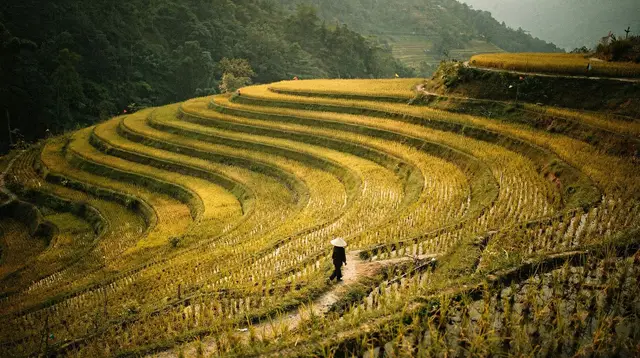
Two things this page deliberately leaves to other pages: the month-by-month detail, which lives on the twelve monthly pages linked above, and the rice terrace calendar around Sapa and Mu Cang Chai, which follows its own separate green-to-golden cycle covered on the terrace seasons page rather than tracking the rainy season exactly.
Booking around the weather
If you are travelling in this window, I would lean toward tours that combine a flexible pace with mountain time before or after the wettest days, rather than a single rigid multi-day loop. The 6-day Vietnam highlights trip through Hanoi, Sapa and a Ha Long Bay cruise works well because it spreads the risk across regions instead of betting everything on one bay departure.
For a shorter mountain dose, the 2-day Sapa and Fansipan trip into the Muong Hoa valley is easier to reschedule than a longer trek if a wet spell rolls in. And if you would rather stay closer to Hanoi and skip the mountain-road risk altogether, the 3-day Thai Nguyen tea culture trip from Hanoi keeps you on lower, gentler ground.
For the mountain climate specifically, including how Sapa and Ha Giang run noticeably cooler and wetter than Hanoi at times, see the dedicated mountain climate page. For cruise-specific cancellation terms, the typhoon and cruise cancellation guide and the general Halong Bay cruise season guide go further than I can here, and anyone heading into the mountains on foot should also read the Sapa trekking guide before setting out.
For a broader view of when to come at all, the best time to visit page and the best-time planning tool both compare this season against the rest of the year side by side.
Rainy season at a glance
| Aspect | What to expect |
|---|---|
| General period | Roughly May to September |
| Typhoon risk window | Roughly July to September, mainly coastal, felt inland too |
| Hanoi and delta | Hot, humid, short heavy downpours |
| Bays (Halong, Lan Ha, Bai Tu Long) | Cruise suspensions possible in poor conditions |
| Northern mountains (Sapa, Ha Giang, Cao Bang) | Landslide and road-closure risk after heavy rain |
| Ninh Binh karst boat trips | Usually continue, comfort and visibility reduced |
| Best-suited traveller | Flexible dates, spare day built in, checks conditions daily |
Frequently asked questions about the rainy season in northern Vietnam
When exactly is the rainy season in northern Vietnam?
Roughly May to September, though the shift in and out of it is gradual rather than a fixed switch. I break down what each specific month tends to bring on the monthly pages linked above.
Does a typhoon on the coast affect Hanoi or Sapa too?
It can. A system reaching Halong Bay or Cat Ba often brings heavy rain and wind well inland, and it is the inland rain, not the coastal storm itself, that raises landslide risk on mountain roads like the Ha Giang loop.
Will my Halong Bay cruise be cancelled for weather?
Cruise operators suspend departures on safety grounds when conditions require it, most often during the July to September window. It is a real possibility to plan around rather than an edge case.
Is trekking in Sapa or Ha Giang unsafe during rainy season?
Trails and mountain roads get slippery and, after heavy rain, landslides can close sections of road or path. It is not a reason to cancel outright, but it is a reason to check local conditions the same day and stay flexible.
Are there good days during the rainy season?
Yes, plenty of them. Mornings are often clear before afternoon downpours build, and some weeks pass with barely a shower. The issue is that you cannot bank on any single day in advance.
Should I avoid booking multi-day tours in summer?
I would not avoid them, but I would book through an operator with a clear weather policy and build in a spare day if the itinerary allows it, rather than stacking a tight schedule against an unpredictable sky.
Seasonal Guide
Verified deep-linked GetYourGuide tours. Book through these links and we earn a small commission at no cost to you.
GetYourGuide does not provide a product photo for this activity — the image shows the meeting point, photographed by us.