Fansipan Cable Car: Reaching Vietnam's Highest Peak Without Trekking
Can you reach the top of Fansipan without hiking?
Yes. A cable car departs from Sun World Fansipan Legacy on the edge of Sapa town and climbs directly to a station near the summit in a few minutes, replacing what would otherwise be a multi-day trek. A short flight of steps and, for part of the way, a funicular train cover the final stretch to the summit marker.
Sapa’s cable car to the roof of Indochina
Fansipan is the highest peak in Vietnam, rising above the Muong Hoa valley on the edge of Sapa town, and for most of the last century reaching its summit meant a demanding multi-day trek through forest and ridge trail. A cable car built up the mountain’s flank changed that entirely. It now carries visitors from a base station on the outskirts of Sapa to a station just below the summit in a matter of minutes, turning what used to be an expedition into something that fits inside a single day trip from Hanoi or a half-day out of Sapa itself.
This page is about that cable car: how the ride works, what the journey actually involves once you step off it, how it compares with trekking, and the practical points that catch first-time visitors out, from the cold at the top to the queues at the bottom. If you are deciding between the cable car and a guided hike to the summit, the comparison starts here; the trekking routes themselves are covered in a dedicated hiking guide and in a page that lays the two approaches side by side, cable car versus hike.
Where the cable car starts and how it works
The cable car departs from a large base complex, Sun World Fansipan Legacy, a short drive from central Sapa. Most visitors arrive by taxi, ride-hailing app, or as part of an organized transfer from Hanoi, since the complex sits slightly outside town rather than in the old quarter itself. The base station includes ticket counters, food stalls and gardens, and on a clear day the queue area already gives a first look at the terraced valley the cable car climbs above.
The cabins run continuously rather than on a fixed timetable, so the ride itself rarely involves a long wait once you are through the ticket gate — it is the queue to reach that gate, at busy times, that adds the real delay. The cabins climb steadily over forest, terraced slopes and, depending on the season, cloud, giving a view of the valley that is otherwise only seen by trekkers over several days of walking. The ride ends at an upper station built into the mountainside, some distance below the true summit.
From the upper station to the summit itself
This is the detail that surprises a lot of first-time visitors: stepping off the cable car does not put you on the summit. From the upper station, a further stretch of steps — and, for part of the way, a short funicular train — carries visitors the rest of the climb to the summit marker itself. It is a manageable walk for most people, nothing like the trekking routes described elsewhere on this site, but it is still a real climb at altitude, with steps that can feel more strenuous than expected in thinner air. Travelers with limited mobility, or anyone unsure how they handle altitude, should factor this final stretch into their plans rather than assuming the cable car alone gets them to the top.
At the summit there is a marker, viewing platforms, a pagoda complex built into the mountainside, and, when the weather cooperates, wide views over the surrounding ranges toward the Chinese border and down into the valleys around Sapa. Cloud is common at this elevation and can close in with little warning, so a clear photo at the top is a matter of timing and season as much as planning.
Cable car or trek: two different ways up the same mountain
The cable car and the multi-day trek reach the same summit, but they are not variations on the same experience — they suit different travelers with different amounts of time, fitness and appetite for physical challenge.
| Cable car | Guided trek | |
|---|---|---|
| Typical duration | A few hours, fits into a day trip | Two or more days, usually with an overnight on the mountain |
| Physical demand | Low; a short climb of steps at the top | High; sustained multi-day hiking on forest and ridge trail |
| What you see | Aerial views over the valley during the ride | Close-up forest, villages and ridgelines along the trail |
| Booking style | Ticketed attraction, often paired with a Sapa day tour | Multi-day guided tour with porters and mountain accommodation |
| Best suited to | Travelers short on time, families, anyone avoiding strenuous hiking | Trekkers wanting the physical challenge and the trail itself |
Neither option is more “authentic” than the other; they are simply different ways of experiencing the same mountain, and plenty of travelers choose the cable car specifically because it opens up the summit to people who would never attempt the trek. For the trekking routes, gear and pacing, see the Sapa trekking guide and the valleys trekking guide; for a homestay base before or after a mountain day, the Sapa homestay guide covers the options.
Is the cable car the right choice for you
The honest answer depends less on how much time you have and more on how you want to spend it. Anyone who wants to stand on the summit of Vietnam’s highest peak without training for a multi-day hike, and anyone travelling with children, older relatives or a mobility concern, is the cable car’s natural audience — it removes almost all of the physical barrier to the top, leaving only the short climb of steps and funicular ride from the upper station described above.
The accessible activities in northern Vietnam guide covers this in more detail for travelers weighing up which mountain experiences are realistic for their group, and the trekking difficulty levels guide is useful for comparing what the cable car spares you against what a guided trek to the same summit actually demands.
That said, the cable car is not a guarantee of a view. Cloud at 3,147 metres can close in regardless of how the ride itself performs, and travelers chasing a specific photograph at the summit marker should build in flexibility rather than fixing everything around a single visit.
The cold at the top is easy to underestimate
The single most common mistake visitors make on a Fansipan cable car day is dressing for Sapa rather than for the summit. Sapa itself already sits at a notably cooler elevation than Hanoi, and the summit is considerably higher again, with a mountain climate of its own — wind, fast-moving cloud and a chill that can catch out visitors who left their hotel in a light jacket because the town felt mild. This difference in conditions between the valley floor and the summit is real and worth planning for on every visit, whatever the season and whatever the forecast down in Sapa says.
Layers are the simplest solution: something warm that packs down small, a windproof outer layer, and a hat, even on a day that starts sunny. The seasonal packing guide and the notes on mountain climate in Sapa and Ha Giang go into more detail on what changes month to month. Whatever the season, treat the summit as a separate climate from the town below it, not a slightly cooler version of the same day.
Booking the ride and avoiding the queues
Ticket counters at the base station sell same-day tickets, but queues build quickly on weekends, holidays and through the clearest months of the year, when everyone is chasing the same views. Booking a ticket, transfer or guided visit in advance avoids standing in that line and, on a guided option, usually comes with a driver or guide who handles the logistics of getting to the base station from Sapa or from Hanoi in the first place. A guided cable car visit can also fold in a Hmong guide who adds context to the summit complex and photo stops along the way that are easy to miss when visiting independently.
a cable car ride paired with a guided hike down the mountain is a popular way to combine the ease of the ascent with a shorter, guided walking descent, while a cable car visit to the peak with a local Hmong guide and photo stops suits travelers who want the summit itself as the main event. For those set on the full trekking experience instead, a two-day cultural trek to the Fansipan summit from Hanoi covers the multi-day route described above, complete with an overnight on the mountain.
Travelers with only a few hours to spare rather than a full day can look at a half-day Fansipan cable car summit tour, which is built around a shorter window and still covers the ride, the summit climb and hotel pickup in Sapa. For a visit without the logistics of joining a fixed group, a private Fansipan summit tour with cable car and guide keeps the pace and timing flexible, which matters if you are trying to time the ride around a break in the cloud.
Travelers who want the summit as part of a longer guided trek rather than a single day can also compare a two-day guided trekking adventure to Fansipan peak, which combines walking sections of the mountain with the cable car for the final stretch.
Fitting the cable car into a wider Sapa itinerary
For most visitors, the cable car is one part of a longer stay in and around Sapa rather than the entire reason for the trip. It pairs naturally with the rice terraces of the Muong Hoa valley, a night or two in a valley homestay, and time spent in Sapa town itself before or after the mountain day.
Travelers coming up from Hanoi for a short window sometimes combine it with stops further afield — the Sapa versus Ha Giang comparison is worth reading if you are still deciding which mountain region fits your trip, and getting from Hanoi to Sapa, including the overnight train to Lao Cai, lays out the transport options for getting there in the first place.
For those short on time, an organized transfer that bundles transport, the cable car ticket and a guide removes most of the planning; the what to book ahead in Hanoi guide flags this alongside other Sapa and northern mountain bookings worth making before you travel rather than on arrival.
A five-day itinerary built around Hanoi and Sapa gives a sense of how much time the cable car, the terraces and the town itself typically need together, and the things to do in Sapa hub rounds out the rest of the valley’s attractions beyond the mountain. Checking seasonal conditions before booking helps too, since cloud cover at the summit varies through the year even when the ride itself runs normally.
Where Fansipan fits among northern Vietnam’s mountains
Fansipan is not the only high ground in the region, and travelers building a longer northern loop sometimes weigh the cable car day against the other ranges the site covers. The destination page for Fansipan sits alongside terraced country further afield: the rice terraces around Mu Cang Chai, the gentler trekking around Pu Luong, and the karst plateau of the Ha Giang loop along the Chinese border.
None of these substitute for standing on Vietnam’s highest point, but they explain why some visitors treat the Fansipan cable car as one stop on a wider mountain itinerary rather than the whole reason for heading north.
For travelers extending west from Sapa rather than back to Hanoi, a two-day Moc Chau and Mai Chau tour with meals covers a different, lower corner of the northern mountains — tea hills and valley villages rather than a summit climb — and pairs naturally with a Fansipan day if the itinerary allows a few extra days. The Moc Chau versus Mai Chau comparison and the Sapa versus Ha Giang guide both help with the same underlying question: which of northern Vietnam’s mountain areas actually matches the time and pace available for the trip.
After the mountain: recovering from a cold, high day
A day built around the cold, thin air of the summit and the walking at the upper station leaves most visitors ready to slow down afterward. Sapa town itself is the easiest place to do that, and the post-trek relaxation day guide covers the options for the day after a mountain outing, from a slow morning in town to a Red Dao herbal bath, a local tradition often recommended after a cold day on the mountain. None of this is necessary — plenty of visitors go straight from the cable car back to a bus or train the same evening — but it is worth knowing the option exists if the summit day turns out colder or longer than expected.
Photographers planning around the ride should also note that light and cloud on Fansipan behave like the rest of the northern mountains: mornings tend to be clearer before cloud builds through the day. The photography in northern Vietnam guide has more on timing shots around this pattern, which applies as much to the view from the cable car cabin as it does to the summit itself.
The bottom line
The Fansipan cable car turns Vietnam’s highest peak into something almost anyone can reach in an afternoon, but it is not quite a door-to-summit lift: expect a short, sometimes steep climb at the top, a real change in temperature and wind from what Sapa feels like below, and queues that reward booking ahead. Treat it as its own short mountain excursion rather than an extension of a mild day in town, and it delivers one of the more striking views in northern Vietnam without the days of walking the same summit otherwise demands.
Trekking and Hiking Around Sapa and Ha Giang
Verified deep-linked GetYourGuide tours. Book through these links and we earn a small commission at no cost to you.
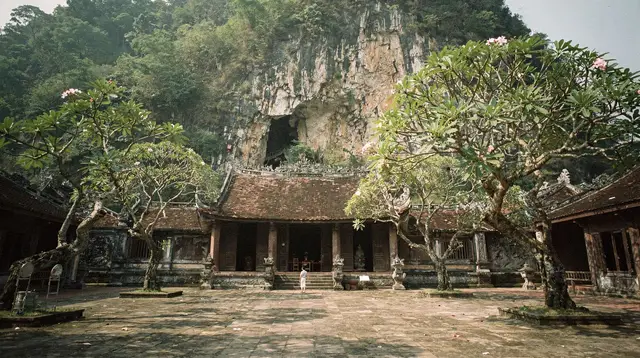
GetYourGuide does not provide a product photo for this activity — the image shows the meeting point, photographed by us.