Photographing Northern Vietnam: What I Wish I'd Known
What's the single most useful photography tip for northern Vietnam?
Shoot early in the day, before the light gets hard and the haze builds up, and stay flexible about which day you go out, since the weather in the hills changes fast. Beyond that, patience with the weather matters more than any gear or spot.
Why the light here is trickier than it looks
I used to think photographing northern Vietnam would be simple: green terraces, misty mountains, a city full of motorbikes and lanterns, point the camera and go. It took a few trips, and a lot of flat, hazy midday shots I later deleted, to realize the light does most of the work here, and the light is not something you can plan around a fixed schedule.
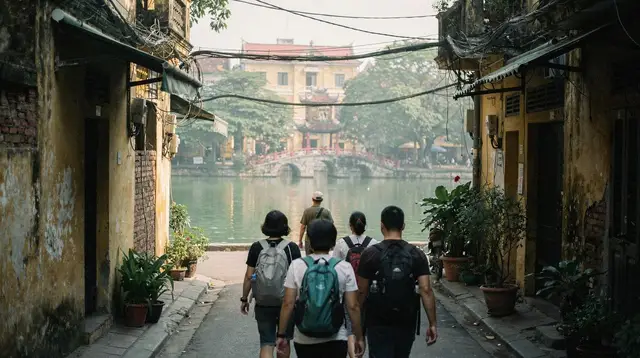
The honest version is this: mornings tend to be gentler here than the middle of the day, in Hanoi’s Old Quarter as much as in the hills around Sapa or Ha Giang. The city is quieter, the air hasn’t heated up yet, and in the mountains the low sun often catches the terraces at an angle that flattens them out later.
But I’d stop short of giving you a specific hour, because on a hazy day or a day after rain, that gentle window can start later, end earlier, or barely show up at all. I’ve had mornings in Mu Cang Chai that stayed soft and workable well past what any guidebook promised, and others where the haze never lifted at all. Chase the conditions of the day you’re actually in, not a printed schedule.
Mist is part of the deal, especially in winter
If you travel in the cooler months, expect mist. It rolls through Sapa, the Ha Giang loop and the Dong Van plateau often enough that I now think of it as part of the region’s character rather than a nuisance to wait out. It softens the mountains, hides the road ahead, and changes what a photograph of the same valley looks like from one hour to the next. Some mornings it burns off, some days it doesn’t, and I’ve learned not to build a shot list around it clearing on cue.
Mist also does something useful for composition: it simplifies a scene. A terraced hillside that looks busy and cluttered in flat midday light can turn into a few clean layers once the haze sets in behind it. I’d rather work with it than fight it. Bring a rain cover for your gear, keep a lens cloth handy for condensation, and treat a misty morning as an opportunity rather than a lost one.
Photographing people, especially in the highlands
This is the part I’m most careful about, and honestly the part I’d rather send you elsewhere for. In the highland communities around Sapa, Ha Giang and Cao Bang, the people you might want to photograph live there, work there, and are not part of the scenery. A market stall, a doorway, a family working a terrace: ask first if you can, keep your distance if you can’t, and accept a no without pushing.
A polite gesture and a smile go a long way, and a purchase at a stall is a better way to build a moment than a lens pointed without warning. I go into the specifics of local customs, and why this matters more in some communities than others, on the northern Vietnam ethnic minorities page rather than here — it deserves its own space, not a paragraph tacked onto a photography post.
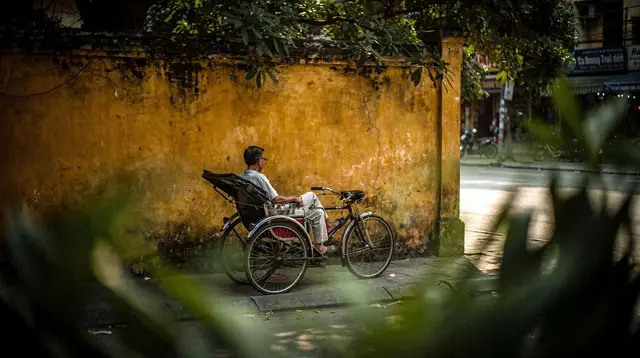
In Hanoi itself, street photography is more forgiving. The Old Quarter is used to cameras, and most vendors and shopkeepers don’t mind a respectful photo, but the same basic courtesy applies: ask when you can, and don’t crowd someone’s workspace for a shot.
What I actually pack, and what I’ve stopped bringing
I travel lighter than I used to. One camera body, two lenses — a standard zoom and something a bit longer for the terraces and mountain views where you can’t always get close — covers nearly everything I’ve wanted to shoot, from Trang An’s limestone karst to a bowl of pho on a plastic stool. A dry bag or a decent rain cover matters more than a third lens, especially if you’re out on a boat in Ninh Binh or on the water around Ha Long Bay. A polarizing filter helps cut haze and glare on bright days, though on a misty morning I usually leave it off, since it can strip out the very atmosphere I’m trying to keep.
For anyone heading into the mountains, a spare battery or two is worth the weight; cooler mornings in Sapa or Ha Giang drain batteries faster than Hanoi’s warmth does, and charging isn’t always convenient on a multi-day loop.
A few honest mistakes I’ve made
I once planned an entire day around a “best time” I’d read somewhere, sat in the van annoyed when the light didn’t show up on schedule, and missed a much better scene an hour later that nobody had written about. I’ve also over-packed gear for trips where I barely used half of it, and under-prepared for rain on days that turned out wet when the forecast looked clear. The pattern I keep coming back to: build in flexibility, whether that means an extra morning in one place or simply not committing to a single fixed plan, and let the actual weather and light of the day decide rather than a rule from a website.
If you’d rather have someone else manage the logistics while you focus on the camera, a guided route through the Sapa and Muong Hoa valley trip gives you time in the terraces without worrying about transport, and a longer multi-day route through Hanoi, Sapa and Ninh Binh spreads your shooting across enough mornings that a hazy one doesn’t ruin the trip.
For something quieter and less photographed, a day out on the Na Hang waterfalls and nature route is worth considering, and a slower cultural morning on the Thai Nguyen tea culture trip is a good change of pace between landscape days.
I’m not going to name a single best spot in this piece, or rank the terraces against each other — that depends on the season, the crop, and honestly on luck with the weather that day, and other pages here go into those specifics properly. What I can tell you is to travel with a flexible schedule, watch the sky rather than a chart, and treat the people you photograph the way you’d want to be treated.
For planning the rest of your route, the best time to visit Hanoi, rice terrace seasons and mountain climate in Sapa and Ha Giang pages are a better source of seasonal detail than anything I’d cram in here, and a route like the five-day Ha Giang loop itinerary is a solid frame to hang a photography-focused trip on.
Photography questions for northern Vietnam
Is there a single best time of day to shoot in Sapa or Ha Giang?
Mornings are generally gentler on the light than midday, but I wouldn’t commit to a fixed hour. Haze, cloud and rain change the picture day to day, so I plan around the weather I’m actually seeing rather than a schedule.
Does the mist ruin photos in winter?
Not in my experience — it changes them. Mist softens the mountains and simplifies busy scenes into cleaner layers. Some days it clears, some days it doesn’t, and I’ve had good results either way.
Is it okay to photograph people in the highland markets and villages?
Ask first when you can, and respect a no. I cover the customs and sensitivities around photographing highland communities in more depth on the dedicated ethnic minorities page rather than here.
What camera gear do I actually need for a trip like this?
I get by with one body and two lenses, plus a rain cover and a spare battery or two for the cooler mountain mornings. A polarizing filter helps with haze on bright days but isn’t essential on misty ones.
Should I plan my whole trip around getting one specific shot?
I’d avoid it. Building in flexible mornings and accepting that some days won’t give you the light you hoped for tends to produce better results than chasing a single planned shot.
Are there secret photo spots you’d recommend?
I don’t rank or single out specific viewpoints here — conditions and crops change too much season to season, and other pages on this site cover specific routes and terraces in more useful detail than a short list would.
Does the season affect what I can photograph in the rice terraces?
Yes, significantly, but I don’t cover the exact timing in this piece. The rice terrace seasons page goes into how the fields change through the year in more detail than fits here.
Is Hanoi itself worth photographing, or is it just a stopover before the mountains?
Hanoi is worth its own time with a camera. The Old Quarter, the lakes and the older districts have a rhythm that’s different from the mountains, and mornings there are quieter and easier to work with than the middle of the day.
Street Food Tours and Vietnamese Cuisine Tastings
Verified deep-linked GetYourGuide tours. Book through these links and we earn a small commission at no cost to you.
GetYourGuide does not provide a product photo for this activity — the image shows the meeting point, photographed by us.