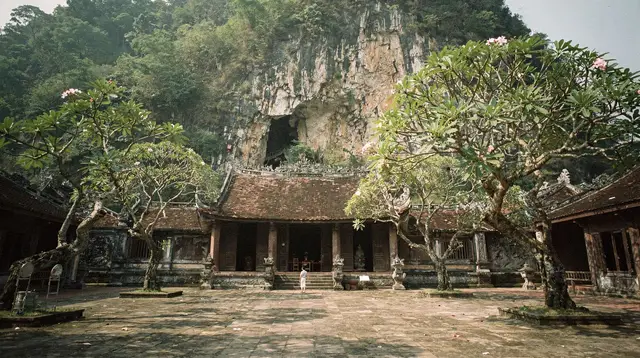
Five Days on the Ha Giang Loop
How many days do you need for the Ha Giang loop?
Five days from Hanoi is the standard shape: a travel day out, two riding days through Dong Van and the Ma Pi Leng pass, a return leg via Bac Ha, and a travel day back. Shorter versions exist, but five days is the pace most riders and most easy rider drivers plan around.
Why five days, and why not a car
The Ha Giang loop is not a scenic drive. It is a sequence of narrow mountain roads, hairpin passes and single-lane village streets, and it is built to be covered on two wheels — either riding a motorbike yourself or sitting behind an easy rider, a local driver who handles the road while you take in the Dong Van karst plateau. An ordinary car has no place on this route: some sections are physically too tight for one, and the point of the loop — stopping at a pass, a market, a homestay, whenever the road asks for it — disappears the moment you are boxed into a set itinerary built for four wheels.
If self-driving and hiring a driver both sound unfamiliar, read easy rider vs self-drive before booking anything, and check motorbike licence and insurance rules either way — riding without the right licence is one of the most common ways a travel insurance claim gets refused in Vietnam.
This is also the point to clear up a mix-up that trips up a lot of first-time readers: Ha Giang is not Sapa. Both sit in Vietnam’s northern mountains, both involve terraced hills and ethnic minority villages, and both get lumped together in trip planning, but they are separate provinces, separate road networks and separate trips. Sapa is reached from Hanoi by a more direct road or overnight train and is built around trekking on foot; the Ha Giang loop is reached by road via Ha Giang city and is built around riding. See Sapa vs Ha Giang if you are still weighing the two — some travellers do both on separate trips, few try to combine them into one.
This page sets out the shape of a five-day loop: where you sleep each night and why the stops fall where they do. It deliberately does not repeat the pass-by-pass detail, the viewpoints or the villages along the way — those live on the Ha Giang loop guide and the dedicated Dong Van plateau guide, and on the destination pages for Ha Giang, Dong Van and Bac Ha. Nor does it quote journey times in hours or price out a motorbike rental or a guide — those figures move too often and too locally to belong on a planning page; check them directly with your rental shop or driver once you’re in Ha Giang city.
The five-day shape at a glance
| Day | Base for the night | What the day is built around |
|---|---|---|
| Day 1 | Ha Giang city | Travel out from Hanoi, gear and paperwork sorted |
| Day 2 | Dong Van | First riding day, the plateau opens up |
| Day 3 | Dong Van or Meo Vac area | Ma Pi Leng pass, second night on the plateau |
| Day 4 | Bac Ha | Return leg south, market town for the night |
| Day 5 | Hanoi | Travel back |
Treat the table as a skeleton, not a timetable. Riders who want a longer loop stretch Days 2–3 into three riding days and push on to Cao Bang and Ban Gioc before heading home — see Ha Giang loop in 3–4 days for the shorter version if five days is more than you have, and the ten-day Cao Bang and Ban Gioc adventure if you want to extend rather than trim.
Day 1: Hanoi to Ha Giang city
The first day is a travel day, and it is worth treating as one rather than trying to also ride the plateau on arrival. Most riders and easy rider groups leave Hanoi in the morning by road or shared minibus and reach Ha Giang city with enough of the day left to rent a bike (if self-driving), meet an easy rider driver, and do a final gear check — helmet, rain layer, a dry bag for anything that can’t get wet, since mountain weather changes fast and without much warning at this stage of the trip.
Ha Giang city itself is a staging point rather than a destination: a night here, a simple dinner, an early start the next morning. If you booked a guided trek or homestay package rather than arranging everything piecemeal, this is also when a pickup or a group meeting point is typically confirmed.
This is the right moment to double-check paperwork. Riding the loop as a foreign visitor without holding a licence that’s valid for a motorbike in Vietnam is a common and costly mistake — see motorbike licence and insurance rules — and it’s far easier to sort out in Ha Giang city than partway up a pass.
Day 2: Ha Giang city to Dong Van
The first real riding day is also the one that changes the trip from “driving through hills” to “the Ha Giang loop.” The road climbs onto the plateau proper, and the landscape shifts from green valley floor to the pale limestone karst the region is known for. This page won’t list the individual passes and viewpoints along the way — the Ha Giang loop guide and the Dong Van plateau guide cover those in the detail they deserve — but the day’s logic is simple: ride steadily, stop where the road opens up, and arrive in Dong Van with enough daylight to settle in before dark, since these mountain roads are not the place to be caught riding after sunset.
Dong Van itself, with its old market square and stone houses, is worth treating as more than a place to sleep. Riders who want a structured way into the area rather than winging it can book a guided trek that starts from town — a two-day trek with a local homestay folds Days 2 and 3 into one guided package with a night among H’mong or Dao villages instead of a hotel room, which suits travellers who’d rather hand the route-finding to someone else for a stretch.
Day 3: Ma Pi Leng and the plateau, second night on high ground
The second riding day is usually built around the Ma Pi Leng Pass, the loop’s best-known stretch of road, carved into the cliff above the Nho Que river. Where you sleep tonight depends on how the loop is shaped: some riders push on to Meo Vac and stay there, others loop back to Dong Van, and guided trekking itineraries often route through remote villages and homestays instead of either town. Again, the pass, the viewpoints and the specific villages are covered on the Dong Van plateau guide rather than repeated here.
For travellers who want a single well-defined activity to anchor the day rather than open-ended riding, two guided options cover the same ground on foot: a Ma Pi Leng skywalk trek with a picnic lunch takes in the pass’s best viewpoints on foot, while a guided trek to the plateau’s ancient villages, also with a picnic lunch spends the day among the stone-house hamlets scattered across the karst rather than on the pass itself. Either works as a rest from riding, dropped into the middle of the loop.
Fog and sudden weather shifts are common on the plateau at altitude; riders should read the motorbike season and fog guide before setting out, rather than assuming the road conditions from the valley below.
Day 4: back toward Hanoi via Bac Ha
The fourth day turns the loop toward home, and most five-day itineraries route the return leg through Bac Ha, a market town known for its Sunday market and for a slower pace than Dong Van after two days on the plateau. The riding is generally considered gentler than Days 2 and 3, which makes it a sensible day to close out the loop before the final transfer back to Hanoi.
If your five days happen to land on a Sunday, Bac Ha’s market is worth building the day around — it draws H’mong and other highland communities from the surrounding villages and is one of the most photographed markets in the northern mountains. A guided option exists for travellers based further along the northern circuit: exploring Bac Ha’s Sunday market by motorbike — useful context even for loop riders arriving from Dong Van rather than Sapa, since it shows how the market day is typically structured. See Bac Ha for what else the town offers beyond market day.
Day 5: Ha Giang city to Hanoi
The final day returns the motorbike (if self-driving) or hands the loop back to the easy rider driver in Ha Giang city, followed by the road or minibus transfer back to Hanoi. Build in slack here rather than scheduling a flight or an onward connection tightly against arrival — mountain roads and shared transport both run on their own timetable, and a five-day loop is not the trip to end with a rushed dash across Hanoi.
Fitting the loop into a longer trip
Five days is enough for the loop on its own, but it slots naturally into a longer northern Vietnam trip either side. Riders continuing north-east from Dong Van instead of looping back through Bac Ha can extend into the Cao Bang and Ban Gioc loop or the full ten-day Cao Bang and Ban Gioc adventure.
Travellers who’d rather trek than ride, or who are deciding between the two regions altogether, should compare this itinerary against a trekking-based week in the mountains via seven days trekking Sapa and Pu Luong. And for anyone still packing, the mountain climate guide for Sapa and Ha Giang and the seasonal packing list are worth a read before setting out — the plateau’s weather is a different proposition from Hanoi’s.
Ha Giang loop, five days: frequently asked questions
Can I do the Ha Giang loop by car?
No. The roads on the plateau, and particularly the passes around Dong Van and Ma Pi Leng, are built for motorbikes and are frequently too narrow, steep or exposed for an ordinary car. The loop is done on a self-driven motorbike or with an easy rider driver, never by hiring a car and driver the way you might for Ninh Binh or Halong Bay transfers.
Is Ha Giang the same as Sapa?
No, and this is the most common mix-up among readers new to northern Vietnam. Sapa and Ha Giang are separate provinces with separate roads, separate towns and separate trip logic — Sapa is centred on trekking on foot around the Muong Hoa valley, Ha Giang on riding a loop across the Dong Van plateau. See Sapa vs Ha Giang for a full comparison.
Do I need a motorbike licence to ride the loop myself?
Self-driving on Vietnamese roads requires a licence valid for the vehicle class, and riding without one is a common reason travel insurance later refuses a claim after an accident. Read motorbike licence and insurance rules before deciding between self-driving and hiring an easy rider.
What’s the difference between riding myself and hiring an easy rider?
Riding yourself gives full control of pace and stops but requires real motorbike experience and the right licence; an easy rider is a local driver who rides the bike while you sit behind, which suits travellers without mountain riding experience. Neither is the “correct” choice — see easy rider vs self-drive for how to decide.
Can I shorten the loop to fewer than five days?
Yes — a tighter three- to four-day version is possible by cutting one riding day or one plateau overnight, though it compresses the Dong Van and Ma Pi Leng section. See Ha Giang loop in 3–4 days for that version.
Where does the loop route go after Dong Van and Ma Pi Leng?
This itinerary routes the return leg through Bac Ha, but riders continuing rather than looping back can extend north-east toward Cao Bang and the Ban Gioc waterfall instead — see Cao Bang and Ban Gioc loop.
Is the Ha Giang loop suitable for someone with no motorbike experience?
Riding it yourself with no experience is not advisable given the road conditions on the passes. An easy rider driver is the usual route for travellers in that position, or a guided trekking package that covers the plateau’s villages and viewpoints on foot instead of by bike.
Motorbike Loops and Countryside Excursions
Verified deep-linked GetYourGuide tours. Book through these links and we earn a small commission at no cost to you.
GetYourGuide does not provide a product photo for this activity — the image shows the meeting point, photographed by us.