What I Actually Pack for Northern Vietnam, Season by Season
What should I pack for a trip to Hanoi and northern Vietnam?
It depends entirely on the season and on how many of the regions you're combining. A humid, drizzly winter city stay needs different layers than a rainy summer boat trip or a dry, sunny autumn trek in the mountains, so I pack around my itinerary rather than a single generic list.
The first time I packed for this part of Vietnam, I made the mistake a lot of first-timers make: I treated it as one trip with one climate. It isn’t. In the space of a week you can go from the damp heat of the Old Quarter to a boat deck on the karst bays to a chilly mountain homestay above Sapa, and each of those places wants something slightly different in your bag. What follows is less a checklist than the way I actually think about it now, season by season, with the pieces I’ve learned to add or leave out.
Start with the season, not the packing list
Before I pack anything, I work out which season I’m actually landing in, because northern Vietnam has four real ones and they don’t behave the same way at all. I keep my full breakdown of what each month feels like on the best time to visit Hanoi page, and if I already know my exact travel window I go straight to the matching month, from January through to December. That single step reshapes everything else in the bag, so I never skip it.
The other variable is geography. A trip that stays in Hanoi packs differently from one that also drops into the karst around Ninh Binh, cruises the bays, or climbs into the mountains around Sapa or the Ha Giang loop. Most of my trips touch at least two of those zones, which is exactly why a single list never works for me.
Winter in Hanoi: layers over a coat
Winter here surprises people who expect tropical Vietnam. It isn’t cold in the way a European winter is, but it’s persistently cool and grey, and the damp gets into everything faster than dry cold ever does. I stopped bringing one heavy coat years ago and switched to several thinner layers I can add or peel off through the day: a base layer, something warmer over it, and a wind- and water-resistant shell on top. A scarf earns its space too, more for the drizzle than for warmth.
If the trip climbs into the mountains, winter layering in Hanoi is only the starting point. Sapa, Ha Giang and Cao Bang run noticeably colder and mistier than the capital, sometimes with frost overnight, and I always add a proper warm layer, a hat and gloves before heading up there. I keep a dedicated rundown of that gear on the mountain climate guide for Sapa and Ha Giang, because trying to reuse city-winter clothing for a highland homestay is a common way to end up cold and miserable.
Summer: built around rain, not heat
Summer flips the packing logic entirely. It’s the wet season across the whole north, and I plan around sudden, heavy downpours rather than around temperature. A compact, packable rain layer lives at the top of my bag the whole trip, along with a dry bag or two for a phone and documents when I’m on open boats or scooters. Quick-drying fabrics matter more here than anywhere else in the year, because nothing hanging in a humid hotel room actually dries overnight.
This is also the season where I read the rainy season page closely before booking anything on the water, since the rainy season in northern Vietnam can affect cruise scheduling on the bays, and typhoon activity later in the season sometimes reshuffles departures altogether. Packing a rain shell is the easy part; building slack into the itinerary is the part people forget.
Autumn: the easiest bag I pack all year
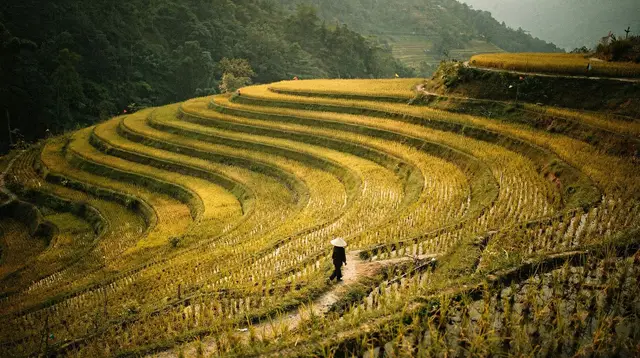
Autumn is when I pack the least and enjoy it the most. The air dries out, the sky clears, and I can get away with breathable layers, a light jacket for the evenings, and comfortable walking shoes rather than boots. It’s also the window when the rice terraces around Sapa and Mu Cang Chai turn gold, which is worth knowing before you fix your dates — I go into that on the rice terrace seasons page. If a trekking day is on the itinerary, autumn is genuinely the forgiving season, and I still cross-check how trail conditions shift between the wet and dry months before deciding on footwear.
Spring: the in-between season
Spring sits between winter and summer and behaves that way: mild, still fairly damp, with that fine persistent drizzle locals call mua phun rather than proper downpours. My spring bag borrows a bit from both neighbours — a light rain layer, one warm piece for cooler mornings, and otherwise breathable clothing. Tet, the lunar new year, usually falls somewhere in this stretch, and if my dates land near it I plan around closures and full transport rather than around what to pack, since a quiet family closure day matters more than an extra layer.
One bag, three landscapes
The real trap isn’t any single season — it’s assuming a city bag works everywhere. A trip that mixes Hanoi, the karst and the mountains needs a bag built in layers you can subtract as you descend and add as you climb, not a single fixed kit. I plan the sequence loosely as: light, breathable clothing for the city and the karst boats, then a warmer, more weatherproof layer that comes out once the road starts climbing toward Sapa or the Ha Giang loop. Footwear follows the same logic — comfortable walking shoes cover most city and boat days, and only the trekking or motorbike-loop sections call for something sturdier.
If a motorbike loop is part of the plan, riding gear changes the packing question again, since wind, fog and cold at altitude are a different problem from rain in the valleys — I keep that separate on the motorbike season and fog guide. And whatever the season, I always leave a folder — physical or digital — for the handful of things worth sorting before landing, which I keep on the what to book ahead in Hanoi page.
For the mountain stretch specifically, whether it’s a short two-day trip into the Muong Hoa valley below Fansipan or a longer highlights route that combines Hanoi, Sapa and a bay cruise, I pack the highland layer as a separate, easy-to-reach unit rather than burying it at the bottom of the bag.
A quick way to sanity-check your own bag
I still run my own packing past the general packing list tool and the best time to visit tool before I zip the bag shut, mostly as a final cross-check against the month and the regions I’ve actually chosen. It’s a useful backstop, but it works best after you’ve already thought through the season-by-season logic above — not as a substitute for it.
If the trip also includes a Thai Nguyen tea district detour or a village day near Bac Ninh, the clothing barely changes from the karst-and-city layer, so I fold those into whichever tour bag I’ve already built, whether that’s the three-day tea culture trip out to Thai Nguyen or the shorter guided visit to the Dinh Bang communal house.
Waterfall country further north is the one exception, since the terrain there behaves more like the mountain zone than the lowlands, and I pack accordingly for something like the three-day waterfall and nature trip to Na Hang.
Packing for Northern Vietnam: FAQ
Do I need a heavy winter coat for Hanoi?
No. I’ve never needed one. Hanoi winters are cool and grey rather than genuinely cold, and several thinner layers plus a water-resistant shell work better than one bulky coat, especially given how damp the air gets.
Is rain gear necessary outside the summer rainy season?
Yes, in a lighter form. Spring brings its own persistent drizzle, and even the dry autumn and winter months can turn wet without warning, so I keep a packable rain layer in the bag year-round rather than only in summer.
Do I need different gear for Sapa or Ha Giang than for Hanoi?
Generally yes. The mountains run colder and mistier than the capital at almost any time of year, and I always pack an extra warm layer, closed shoes and something for my hands and head before heading up, on top of whatever I’ve packed for the city.
What matters most for a rainy-season boat trip on the bays?
A reliable rain layer and a dry bag for electronics matter more than anything else, since open boats and transfer points offer little shelter. I also build some flexibility into my schedule in case weather reshuffles a cruise departure.
Should I pack differently for a trekking day than for a city day?
Yes. Trekking days call for sturdier, broken-in footwear and quick-drying fabrics, while city and boat days are fine in ordinary comfortable shoes. I decide which pieces to bring along based on which days actually include a trek.
Does the season affect what to pack for the rice terraces?
Indirectly, yes. The terraces look completely different depending on when you visit, and that affects how much mud or dust you’re likely to deal with underfoot, which is part of why I check the season before finalising footwear.
Is one packing list enough for a trip that combines Hanoi, the karst and the mountains?
No, and that’s the main point of this page. A single fixed list tends to under-pack for the mountains or over-pack for the city. I build my bag in layers that I can add or remove as the itinerary moves between regions.
Seasonal Guide
Verified deep-linked GetYourGuide tours. Book through these links and we earn a small commission at no cost to you.
GetYourGuide does not provide a product photo for this activity — the image shows the meeting point, photographed by us.