Group vs Private Multi-Day Tour: Which Fits Your Trip
Is a private multi-day tour always better than a group tour in northern Vietnam?
No. A private tour buys flexibility on timing and pace, while a group tour buys a fixed, pre-tested itinerary and a shared social experience. Guide quality depends on the tour operator you book, not on whether the format is group or private.
Two formats, one decision that shapes the whole trip
Almost every multi-day tour from Hanoi — whether it runs to Sapa, Ha Giang, Pu Luong or Cao Bang — is sold in two formats: a shared group departure with a fixed roster of travellers, or a private booking for your own party. The destination pages on this site cover what each route actually involves, from terraces to karst to border waterfalls. This page does something different: it looks only at what changes when you pick group over private, or the other way round, across any of those routes, so you can make that call once and apply it wherever it matters.
The short version is that the two formats trade different things. A group departure buys a fixed, pre-tested schedule and other people to travel with, usually at a lower cost per person. A private booking buys control over timing, pace and who is in the vehicle with you. Neither one is objectively “better” on quality — that depends on the operator — but the two formats do feel different day to day, and it is worth being clear about which differences actually matter to your trip before you book.
The idea worth correcting first
A private tour is not automatically a better-guided tour. It is tempting to assume that paying for a private booking upgrades the guide along with the vehicle, but that is not how tour operators generally staff their trips. A guide is trained, briefed and — in the stronger operators — regularly evaluated by the company that employs them, and that same guide might lead a group departure on Monday and a private booking on Wednesday.
What decides whether your guide is sharp, well-informed and easy to spend a week with is the operator’s hiring standard, not the format you paid for. A private booking from a weak, under-resourced operator can be guided worse than a well-run group departure from a strong one. If guide quality is your priority, the operator you choose matters more than the format you tick.
This matters because it changes where you should spend your research time. Rather than assuming “private” solves the guiding question, it is worth reading what an operator actually includes — covered on the what’s included page — and checking how a route is normally paced, covered on the pace and transfer times page, before deciding between group and private for a given trip.
What actually changes: schedule flexibility
This is the clearest, most consistent difference between the two formats. On a group departure, the itinerary is fixed before you arrive: the group leaves the hotel at a set time, the driver and guide answer to a schedule built around every traveller in the vehicle, and stops along the route are timed to keep the whole group moving together. That structure is not a downside on its own — it is what makes a multi-day route through unfamiliar terrain run smoothly, and most travellers barely notice it once the trip is underway.
On a private booking, that schedule bends around your own preferences, within the working day the driver and guide can put in. You can ask to leave later after a heavy travel day, linger longer at a viewpoint, skip a stop that does not interest you, or add a short detour the guide suggests.
This is where the Ha Giang loop and other routes with strong scenic variation reward flexibility most: a private booking lets you chase good light or wait out a cloud bank over the Ma Pi Leng Pass in a way a group schedule cannot accommodate. The same logic applies to homestay-based routes like Pu Luong or Mai Chau, where an earlier or later arrival changes how much daylight you get for a walk before dinner.
The trade-off is real, though: that flexibility usually comes at a higher cost per person, since you are covering the vehicle and guide’s time without other travellers sharing it.
What actually changes: group composition
On a group tour, your travelling companions for the next two, four or seven days are whoever else booked the same departure — a mix the operator does not control and cannot predict much in advance. Most of the time this works out fine, and shared meals, van conversations and the odd late-night beer are part of what people enjoy about the format. Occasionally the mix is a poor match: very different paces, ages or interests can make a long multi-day route feel longer. There is no way to know this in advance, which is the honest trade travellers make for the lower price and the social element.
A private booking removes that variable entirely. Whoever you book with — a partner, family, or a group of friends — is who you travel with, and no one else joins the vehicle or the itinerary. For routes with a strong physical or logistical demand, like the Cao Bang and Ban Gioc loop or a multi-day motorbike route, this consistency matters more than it might for a gentler route, since a mismatched pace among strangers is harder to absorb over several riding days than over a single afternoon.
What actually changes: level of accompaniment
Group and private tours are usually staffed similarly on paper — one guide, one driver, for the whole route — but how much of that guide’s attention reaches you differs. On a group departure, the guide’s briefings, explanations and answers are shared across everyone in the vehicle, and questions specific to your interests (dietary needs, photography stops, a particular site you want to spend longer at) compete with the rest of the group’s needs.
On a private booking, that same guide’s attention is entirely yours, which is useful if you have specific questions about, say, the Trang An boat route or want a slower, more detailed walk through a craft village than a fixed itinerary allows.
This is also where the “not automatically better” point comes back in: more attention from a mediocre guide is still a mediocre experience. The gain from private accompaniment is proportional to how good the guide already is, not a fixed upgrade you get for paying more.
A side-by-side view
| Factor | Group tour | Private tour |
|---|---|---|
| Schedule | Fixed departure and stop times, set before the trip | Adjustable within the working day, agreed with guide/driver |
| Who you travel with | Other travellers on the same departure, mix unknown in advance | Only your own party |
| Guide’s attention | Shared across the group | Focused on your party |
| Vehicle | Shared van or bus | Usually a dedicated vehicle for road-based routes |
| Typical cost per person | Lower, cost split across the group | Higher, cost carried by your own party |
| Best suited to | Solo travellers, budget-conscious trips, sociable pace | Families, specific requests, tight or unusual schedules |
How this plays out on specific routes
The trade-offs above are the same wherever you apply them, but a few routes make the choice sharper than others.
On the Sapa route, trekking pace varies enormously between travellers, and a private booking lets a slower or faster walker set their own rhythm rather than matching a group average — something worth weighing against the trekking difficulty of the specific valley walk you have in mind.
On a Ninh Binh and Ha Long Bay combined multi-day route, the private format is useful mainly for the road transfer days, since the boat portions of a cruise are usually shared with other cabins regardless of how you booked the land segment — a private car does not always mean a private boat, and it is worth checking that detail on the specific listing.
On the Ha Giang loop, especially by motorbike, riders often prefer a private or small, self-selected group precisely because pace, stopping points and rest days matter more over several days of mountain riding than they do on a single day trip — see the easy rider versus self-drive comparison for how that choice interacts with licensing and insurance.
Families, mixed-ability parties and solo travellers
The format that suits a trip often has less to do with budget than with who is actually in the vehicle. A family travelling with children benefits from the same flexibility that makes private bookings useful on scenic routes: a rest stop can be added when someone is tired, a long museum visit can be shortened, and the departure time can shift around a child’s sleep schedule rather than the other way round. The northern Vietnam with kids guide covers this in more depth, but the short version is that a private booking removes the pressure of keeping a young child’s pace matched to a group of adult strangers, which is often the single biggest source of friction on a family multi-day trip.
Mixed-ability groups — say, one strong walker and one who prefers a shorter, flatter route — face a similar problem on trekking-heavy itineraries. A group departure fixes the trekking distance and pace in advance, with limited room to shorten a day for one member of the party without affecting everyone else.
A private booking can sometimes split a day’s activity, with one guide or an arranged alternative for whoever wants a gentler option, though this depends entirely on what the specific operator offers, and it is worth asking directly rather than assuming it is included. The trekking difficulty levels guide is a useful reference before comparing what a group departure and a private booking each promise on the same route.
Solo travellers sit at the other end of this. A group departure is often the more practical and more sociable choice for one person, since it comes with built-in company for meals and van rides without the cost of covering a private vehicle alone. That does not rule out a private booking for a solo traveller with unusual timing needs or a strong preference for a self-set pace — it simply means the calculation tips further towards group by default, all else being equal.
Wildlife, night activities and specialised stops
Not every multi-day route is built purely around scenery and trekking. Some itineraries include a specific activity — a night-time wildlife walk, a monastery visit, a particular temple complex — where timing matters more than it does on a standard sightseeing stop.
Cuc Phuong National Park, for example, is known for night-time primate and wildlife spotting, and the quiet, small-group conditions that activity needs are easier to guarantee on a private booking than on a fixed group schedule shared with a full van; see the Cuc Phuong national park day trip guide for how that specific stop is usually run, or the private Cuc Phuong wildlife night-spotting tour for a listing built around exactly this trade-off.
The same logic applies to any stop where noise, timing or group size affects what you actually get to see — a private format gives the operator more room to adjust for it, though it is worth confirming with the listing rather than assuming.
Longer, multi-region routes
The group-versus-private choice gets more consequential the longer the trip runs. A two-day route absorbs a mismatched pace or a rigid schedule fairly easily; an eight- to twelve-day route covering several regions compounds small frictions day after day. On longer itineraries that combine, say, Ha Giang’s mountain roads with Ninh Binh’s karst and a stretch of the coast, the flexibility of a private booking to rearrange a day around weather, fatigue or an unplanned stop becomes more valuable than it would on a short weekend trip, simply because there are more days for something to shift.
Some longer routes are also run by train rather than road for part of the journey, which changes the group-versus-private calculation again, since a shared train carriage is shared regardless of how the rest of the tour is booked. Reading the how many days in northern Vietnam guide alongside whichever specific multi-day route you are considering helps set expectations before comparing group and private pricing for the same length of trip.
For travellers weighing a longer, train-assisted route across several regions, the 12-day northern Vietnam trip by train is one example of how a longer itinerary is structured, mixing road transfers with a rail segment.
Questions worth asking before you book
Whichever format you lean towards, a short list of questions to the operator clears up most of the ambiguity that price listings leave out:
- Is the vehicle genuinely private on every day of the route, or shared at any point (boat, cable car, ferry)?
- How is the daily schedule set, and how much can it move on request?
- What is the cancellation and rescheduling policy if weather affects a mountain or coastal leg?
- Does the guide speak the language you need well enough for the level of detail you want?
- Is accommodation the same standard across group and private versions of the same route, or does one include an upgrade?
These questions matter more than the group-versus-private label itself, because two “private” listings from different operators can differ from each other more than a private and a group listing from the same well-run operator.
Booking timing and last-minute changes
Group departures generally need to be booked further ahead, since they depend on enough travellers signing up for the date to run — see the booking in advance or on arrival guide for how far ahead that typically means for different routes. Private bookings are usually more flexible on lead time, since the trip does not depend on a group filling up, though popular routes and peak weeks still fill guides and vehicles ahead of arrival. If your dates are fixed and non-negotiable, checking availability early avoids narrowing your choice to whichever format still has space closer to departure.
If you already know roughly how many days you have and where you are headed, working out how many days in northern Vietnam makes sense for your route is the more useful next step — the group-or-private decision then applies cleanly on top of whatever itinerary length you land on.
Booking a route
Several routes covered by the destination guides above are available in both group and private formats. A few starting points, matched to the routes discussed on this page:
For a taste of the northern mountains without committing to a multi-day route first, the shared group day trip to Mai Chau’s rice valleys or its full-day group or private alternative both work as a lower-stakes way to test how the group format feels before booking something longer.
For travellers set on the private format, the four-day, three-night private motorbike route through Ha Giang and the private Ninh Binh cathedral and heritage tour both keep the vehicle and guide’s attention with your own party throughout.
For a quieter multi-day option outside the busier Sapa and Ha Giang corridors, the private two-day, one-night trip to Ba Be Lake pairs a lake-based itinerary with the flexibility of a private booking.
Whichever format and route you pick, the comparisons on this page hold: check the operator, not just the label, and match the format to what you actually want out of the days on the road.
Tour Comparisons
Verified deep-linked GetYourGuide tours. Book through these links and we earn a small commission at no cost to you.
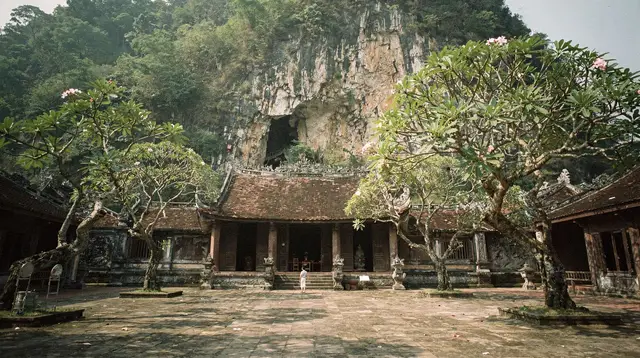
GetYourGuide does not provide a product photo for this activity — the image shows the meeting point, photographed by us.