Countryside Two-Wheel Tours from Hanoi: Vespa and Motorbike Rides Beyond the City
What is a Hanoi countryside two-wheel tour?
It is a Vespa or chauffeured motorbike ride out of central Hanoi into the surrounding countryside, on rural roads and dyke tracks past rice fields, canals and village houses, rather than through the city streets or the karst scenery of Ninh Binh, which lies much further away.
Beyond the ring roads, still around Hanoi
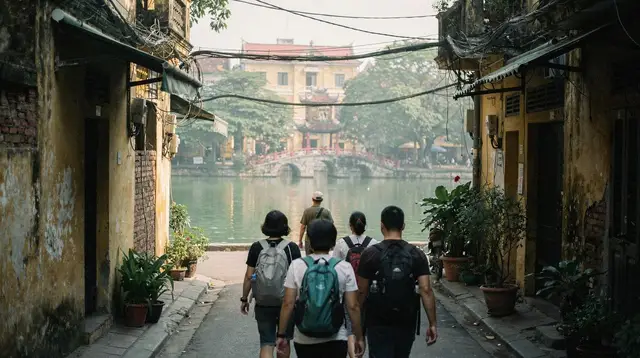
Hanoi’s traffic thins out surprisingly fast once you cross the Red River or head past the outer districts. Within a short ride of the centre, the city gives way to a different landscape entirely: paddy fields cut by irrigation canals, brick kilns, communal houses with curved tiled roofs, and lanes just wide enough for two motorbikes to pass. A countryside two-wheel tour is built around that transition — leaving the Old Quarter behind and riding out into open country, on a Vespa, a chauffeured motorbike, or occasionally a bicycle, with a local guide setting the pace.
This is a different trip from the city-centre Vespa day tour, the after-dark street food Vespa ride, or a side-car tour around the lakes — those stay inside Hanoi and focus on neighbourhoods, snacks and city landmarks.
It is also not a day trip to Ninh Binh, which is a separate destination south of the capital with its own karst scenery, boat rides through Trang An or Tam Coc, and a road transfer of its own — covered on the Ninh Binh day trip guide, not here. A countryside two-wheel tour is shorter, closer to the city, and built entirely around the rural fringe of Hanoi itself.
What the ride actually looks like
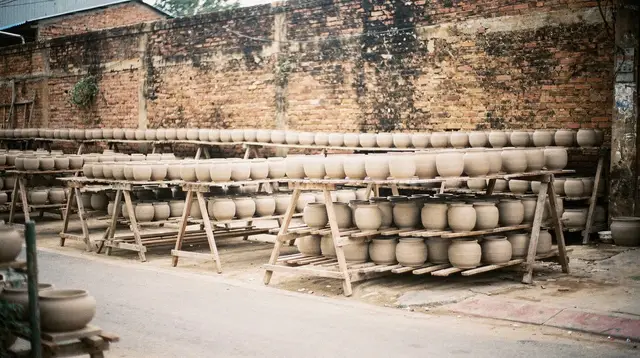
Most operators pick you up in the Old Quarter or the French Quarter and head out along one of a handful of directions — north across the river toward the ceramic and paper villages, west toward the ancient laterite houses beyond the city, or south-east toward the folk-painting and communal-house hamlets. The route almost always mixes a stretch of ordinary road with a longer section of narrow village lanes and dyke-top tracks, where the pace naturally slows and the guide can point things out along the way: a family threshing rice by hand, a roadside shrine, a market stacked with produce that never reaches the city.
Stops vary by operator and by season, but a typical ride pauses at a village gate or communal house, a stretch of open paddy with a clear view, and sometimes a small workshop or family home where someone explains a local craft in passing.
This is different from a dedicated craft-village visit — a ride that stops briefly at Bat Trang or passes near Duong Lam is not the same trip as the full Bat Trang pottery village day trip or the Duong Lam ancient village guide, which allow proper time to browse workshops and walk the old lanes. If a craft village is the main reason for your day, book one of those instead and treat a countryside two-wheel ride as a way to see the landscape in between.
Riding yourself or riding behind a driver
Two-wheel countryside outings split into two formats, and it is worth knowing which one you are booking before you commit.
Self-ride formats put you on a bicycle or an automatic scooter and have you follow a guide along the route. This suits travellers who are comfortable balancing on two wheels and want a bit more independence, and it tends to feel calmer since you set your own speed within the group.
Chauffeured formats seat you behind an experienced local rider, often on a Vespa or a classic motorbike, in the style Hanoians call xe om. You hold on, the driver handles the traffic, the gears and the unpaved stretches, and you are free to look around, take photos, and simply take in the fields rolling past. This is the more relaxed option for anyone unsure about handling a motorbike on Vietnamese roads, or simply not licensed to.
Neither format requires you to hold a motorbike licence as a passenger. Licence and insurance questions only matter if you rent a bike and ride it yourself independently of a tour — a different activity, covered separately on the motorbike licence and insurance guide, not on a guided countryside ride where someone else is driving.
City rides, side-car rides, and countryside rides compared
| Format | Setting | Typical time of day | Main focus |
|---|---|---|---|
| City Vespa day tour | Old Quarter, French Quarter, lakes | Morning or afternoon | Landmarks, neighbourhoods |
| Night street food Vespa tour | Old Quarter and food streets | Evening | Street food tasting |
| Side-car tour | Hoan Kiem area and central sights | Morning, afternoon or evening | Sightseeing, photos |
| Countryside two-wheel tour | Rural lanes, rice fields, villages | Morning or afternoon | Open scenery, village life |
The overlap between these is mostly the vehicle, not the setting. A ride billed as a countryside or backstreet tour should spend most of its time outside the built-up city, on lanes lined by fields rather than shopfronts; if a “countryside” listing turns out to circle back into town quickly, it is closer to a city ride with a rural detour than a true countryside outing.
Choosing a route
A handful of directions cover most of what operators offer close to Hanoi, and each has a slightly different character.
- North across the Red River, toward villages known for a craft — paper, pottery, folk woodblock prints — with flat roads and river views along the dykes.
- South-east toward communal houses and old market towns, where the draw is architecture: carved wooden communal houses, ancient gates, and village greens that have changed little over generations.
- West toward the edge of the delta, where laterite stone houses and older village layouts start to appear, closer in feel to the wider countryside than to a Hanoi suburb.
Some longer-format countryside rides combine a village stop with a folk-painting workshop or a communal house visit in a single loop, riding by jeep or motorbike depending on the operator, which suits travellers who want a fuller cultural stop rather than scenery alone.
a countryside back-street ride with a local guide through the rice fields and lanes outside the centre is a straightforward way to see this rural fringe in half a day, while a guided visit to a historic communal house village beyond the city leans more toward architecture and village life along the way. For a route built around a craft stop, a ride combining a rice-paper village with an ancient citadel site pairs the open countryside with two distinct historical stops in one outing.
What to bring and wear
Since these rides spend real time outdoors and sometimes stop at a communal house, temple gate or family home, modest clothing helps — shoulders and knees covered is a safe default even if a formal temple is not on the route. Closed shoes are more practical than sandals on dyke tracks and workshop floors. A light rain jacket or poncho is worth packing outside the driest months, since a countryside ride usually continues through a passing shower rather than turning back. Sunscreen and a hat matter more here than on a city ride, since there is far less shade once you leave the built-up streets.
Season and timing
The rice fields themselves change the view through the year: green and full through much of the growing season, golden and busy at harvest, then bare or flooded for a stretch afterward before the next planting. None of that follows a fixed date from one year to the next, so treat any season mentioned by an operator as a general guide rather than a guarantee of a particular colour in the fields on your specific date. Winter rides out of Hanoi can be cool and grey rather than warm, so a jacket matters even though this is a subtropical country, not a tropical one — northern Vietnam has a real winter.
Most countryside rides run as half-day outings, in the morning or the afternoon, timed around daylight and cooler hours rather than around a meal the way the evening street food rides are. Traffic on the way out of the city is usually lighter earlier in the day, which also tends to make the first stretch of the ride smoother.
Getting around Hanoi before or after your ride
If you are combining a countryside ride with other sightseeing on the same trip, it helps to have a general sense of how getting around Hanoi works — ride-hailing apps, metered taxis, the small but useful metro lines, and the sheer volume of motorbike traffic that defines the city’s streets. A countryside operator will usually handle pickup and drop-off directly, so this matters more for the rest of your stay than for the tour itself.
Travellers building a short first visit sometimes pair a countryside ride with a day exploring the centre on foot — see the two-day Old Quarter itinerary for a sense of how that combination can fit into a longer Hanoi stay.
A note on what this trip is not
Because “countryside” and “village” both come up across several different Hanoi tour categories, it is worth being explicit about the boundaries. This guide covers Vespa and chauffeured motorbike rides into the rural fringe close to Hanoi. It does not cover the van or minibus day trips to Ninh Binh, which involve a longer road transfer to a separate karst destination with boat rides through Trang An or Tam Coc — those live on the Ninh Binh day trip guide.
It also does not replace a dedicated craft-village visit; if pottery, silk or an ancient village layout is the main draw, the craft village and workshop day trip guide covers that in more depth than a passing stop on a countryside ride can.
a folk-painting village outing that pairs a countryside route with a hands-on craft stop and lunch is one way to combine the two interests in a single day if time is tight.
Choosing between the two-wheel formats
For travellers deciding between a countryside two-wheel ride, a cyclo tour around Hoan Kiem, or a dedicated craft village day trip, the choice mostly comes down to what you want more of: open scenery and rural roads favour the countryside ride; central landmarks and a slower, gentler pace favour a cyclo; and time to browse workshops properly favours a dedicated village trip. All three can fit into the same Hanoi stay without much overlap, since each spends its time in a genuinely different setting.
Whichever format you choose, book with an operator that states clearly whether you will be riding yourself or seated behind a driver, and what the route actually covers — the difference between a genuine countryside loop and a short rural detour tacked onto a city itinerary is exactly the kind of detail worth checking before you book.
Frequently asked questions about countryside two-wheel tours from Hanoi
Is a countryside two-wheel tour the same as Ninh Binh?
No. Ninh Binh is a separate destination south of Hanoi with its own karst landscape, boat rides and multi-hour transfer, described on its own pages. A countryside two-wheel tour stays in the rural fringe close to the capital and returns the same day without a long road transfer.
Do I ride myself or sit behind a driver?
Both formats exist. Some outfits put you on a bicycle or an automatic scooter you ride yourself, following a local guide; others seat you behind an experienced rider on a Vespa or motorbike, known locally as xe om style, so you can look around instead of watching the road.
Do I need a motorbike licence for a chauffeured ride?
Not as a passenger behind a driver. Licence and insurance questions only come up if you rent a bike and ride it yourself, which is a different activity covered on its own page.
How does this differ from the city Vespa and side-car tours?
City tours weave through the Old Quarter and central lakes after dark or around meal times, focused on street food and neighbourhood atmosphere. Countryside tours head out past the ring roads into open fields and village lanes, with a different rhythm and scenery.
Does the tour include the craft villages?
Some countryside routes pass through or near villages such as Bat Trang or Duong Lam, but a dedicated visit to one of those villages, with time to browse workshops, is a distinct trip described on its own guide.
What should I wear and bring?
Light, breathable clothing that covers shoulders and knees if a temple or communal house is on the route, closed shoes rather than sandals, sunscreen, and a light jacket or poncho since rides continue in a light drizzle unless conditions turn heavier.
Is this a good option for people who dislike or cannot ride motorbikes themselves?
Yes, when you choose a chauffeured format. A driver handles the bike and the traffic; you hold on and take in the scenery, which suits travellers uneasy about handling a motorbike in Vietnamese traffic themselves.
What time of day do these tours run?
Countryside routes usually run in daylight, either morning or afternoon, since the appeal is the open scenery and the light over the fields, unlike the evening food-focused city rides.
Vespa and Cyclo Tours Through Hanoi
Verified deep-linked GetYourGuide tours. Book through these links and we earn a small commission at no cost to you.
GetYourGuide does not provide a product photo for this activity — the image shows the meeting point, photographed by us.