Hanoi in March: What the Weather Is Really Like
What is Hanoi like in March?
March is the turning point between winter and spring: the grey, damp chill eases, the air warms and gets noticeably more humid, and a fine persistent drizzle (mua phun) becomes more common than outright rain. It is a comfortable month overall, but skies are rarely fully clear and you should still pack layers.
The Month Winter Finally Lets Go
I always notice March in Hanoi before I check a calendar. The coats come off the motorbike drivers, the old men stop huddling over their coffee glasses on street corners, and somewhere in the second or third week, the sky over Hoan Kiem Lake stops looking the colour of wet concrete and starts looking, on the better days, almost blue. It’s not dramatic. It’s a slow unclenching after a winter that was never brutal but was persistently grey.
If you’ve read my rundown of the best time to visit Hanoi, you already know this city runs on four real seasons, which surprises people who picture Vietnam as uniformly tropical. March sits in the hinge between the cool, overcast winter and the properly hot, humid months ahead. It is not yet the tropical postcard. It is something quieter.
The Air Changes Before the Temperature Does
What strikes me most about March is that humidity arrives before heat does. Early in the month, mornings can still carry a leftover chill, the kind that has you reaching for a light jacket on the walk to a bowl of pho. But the air itself is thicker than it was in January. Windows fog up. Stone floors feel faintly damp underfoot. Locals have a name for the fine, almost weightless rain that starts showing up more often now: mua phun, a drizzle so gentle it barely counts as rain, more like walking through a cloud that’s decided to sit at street level for an afternoon.
This is not the rainy season. I want to be clear about that, because it’s an easy thing to conflate. The heavy, dramatic downpours that define a northern Vietnamese summer, the kind that can flood a street in twenty minutes, are still months away and belong to a different weather pattern entirely. March rain is softer, more persistent, less predictable in a different way — you’re more likely to get a grey, misty day than a violent storm. If you want the full picture of how that later, heavier pattern behaves, I’ve written separately about the rainy season in northern Vietnam, and it’s worth reading before you assume March and July feel anything alike.
What This Means for Packing and Plans
I never trust a single forecast for a whole March trip to Hanoi, because the month genuinely swings day to day. I pack for both a grey, damp morning and an unexpectedly bright afternoon: a light rain jacket that packs down small, a couple of layers I can add or shed, and shoes that won’t mind a puddle in the Old Quarter. What I don’t pack is anything built for real heat. That comes later.
Because the drizzle is so fine and so easy to walk through, March hasn’t stopped me from doing anything I’d planned. I’ve wandered the courtyards of the Temple of Literature under a light mist and honestly preferred it to a harsh midday sun. Boat trips out to the Perfume Pagoda still run as normal, and if you want the full logistics of that half-day up the Yen stream, I’ve laid it out in the Perfume Pagoda guide.
Where March does ask for a bit more flexibility is on the water. Cruises out to Halong Bay generally sail without issue this early in the year — March sits well outside the typhoon window that starts building later in summer — but haze and low cloud can soften the views of the limestone karsts, and mist is simply part of the scenery some days rather than a flaw in it.
I go into more detail on how the calendar affects visibility and departures in my notes on Halong Bay cruise season, and if you’re the type who wants a backup plan in writing, it’s worth skimming the typhoon cancellation policy for cruises even though March is a low-risk month for it. If you’d rather see the bay and the karsts of Ninh Binh on the same trip, this Ha Long Bay, Ninh Binh and Pu Luong 5 day tour strings them together well in this milder shoulder-season weather.
this 2-day Ha Long Bay cruise has been my go-to recommendation for March, since the shorter overnight format hedges nicely against a hazier day without committing you to a longer trip on the water.
The Rice Terraces Are Only Just Starting
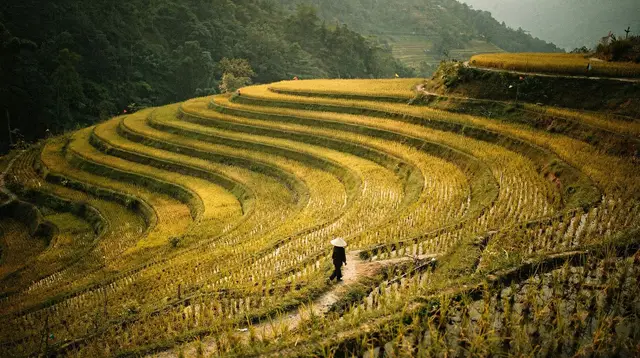
One thing I have to correct people on every March: this is not the season for golden rice terraces. If you’ve seen photos of Sapa or Mu Cang Chai glowing amber and assumed you’d see something similar in March, you won’t. The paddies around Sapa at this time of year are only beginning to fill with water ahead of planting, which is its own quietly beautiful sight — mirror-flat fields catching the sky — but it’s a completely different look from the harvest colours later in the year.
I go into exactly how that cycle unfolds, month by month, in my piece on rice terrace seasons in northern Vietnam, and I’d genuinely recommend reading it before you build a March itinerary around terrace photography.
That said, March in the mountains has its own appeal. Days are milder than the depths of winter, and if you’re heading up for the scenery rather than the paddies specifically, a trip built around this Sapa, Fansipan and Muong Hoa valley tour lets you take in the valley views and, cable car conditions permitting, the summit of Fansipan without fighting summer heat or winter cold.
A Gentler Kind of Day Trip Weather
March is also, in my experience, an underrated month for day trips south of Hanoi. The karst scenery around Ninh Binh actually benefits from a bit of atmospheric haze, in my opinion — it makes the limestone towers look more like the ink-wash paintings they’ve inspired for centuries. If you’re weighing a single day against something longer, I’ve compared the options in three days combining Hanoi and Ninh Binh. For a short overnight version, this Ninh Binh and Ha Long Bay 2 day 1 night trip is an easy way to fit both into one manageable trip.
For something further afield and a little different from the standard bay-and-karst circuit, I’ll also point you to this three-day Thai Nguyen tea culture tour, which takes advantage of the same mild, workable weather without the crowds you’ll find on the more famous routes.
Should You Come in March?
My honest answer: yes, with the right expectations. March gives you a Hanoi that’s shaking off winter without yet sweating through summer, and that middle ground is genuinely pleasant to walk around in, even if it rarely delivers a postcard-blue sky for days on end. Compare it against the neighbouring months in my best time to visit Hanoi overview, or read about Hanoi in April if you’re flexible on dates and want a sense of how quickly the season keeps moving after March ends.
Hanoi in March: Frequently Asked Questions
Does it rain a lot in Hanoi in March?
March brings more overcast, misty days than outright heavy rain. The fine drizzle known locally as mua phun is common, but the intense downpours of the true rainy season don’t arrive until later in the year.
Is March too early for the Sapa rice terraces to be green?
Yes. In March the terraces around Sapa and Mu Cang Chai are mostly bare or just being filled with water ahead of planting, not green or golden. For the full seasonal cycle, see the dedicated guide on rice terrace timing.
Can I still cruise Halong Bay in March?
Yes, cruises run normally in March and it sits well outside the summer typhoon window. Haze can reduce visibility of the karsts on some days, but cancellations for weather are uncommon this early in the year.
What should I pack for Hanoi in March?
Light layers, a packable rain jacket, and comfortable waterproof-ish shoes cover most March days. Avoid packing only for heat — early mornings can still feel cool and damp.
Is March considered the rainy season in northern Vietnam?
No. March is a transitional spring month with light, intermittent drizzle. The true rainy season, with heavier and more frequent downpours, typically builds from around May onward.
Is March a good month for day trips from Hanoi?
Generally yes. Day trips to Ninh Binh and the Perfume Pagoda run without disruption, and the softer, hazier light can actually suit the limestone karst scenery well.
How does Hanoi in March compare to Hanoi in February?
March is milder and more humid than February, with less of winter’s persistent grey chill, though it isn’t dramatically warmer overnight — the shift happens gradually across the month.
Seasonal Guide
Verified deep-linked GetYourGuide tours. Book through these links and we earn a small commission at no cost to you.
GetYourGuide does not provide a product photo for this activity — the image shows the meeting point, photographed by us.